Februari 12, 2026

Basic English Grammar – Simple Rules for Beginners

A beginner-friendly guide to basic English grammar, covering tenses, sentence structure, and common grammar rules with examples.

Februari 11, 2026 | Lumeyesy

Grammar in the Courts of Medieval Kingdoms

Grammar in the Courts of Medieval Kingdoms

Grammar in the Courts of Medieval Kingdoms – When we think about medieval kingdoms, images of grand castles, armored knights, and royal banquets often come to mind. Yet behind the pageantry and power struggles, there was something far quieter, but just as influential, shaping these courts: grammar. In the courts of medieval kingdoms, grammar was not merely about language rules. It was a symbol of education, authority, diplomacy, and even political control.

Understanding grammar in the courts of medieval kingdoms opens a fascinating window into how language shaped governance, culture, and intellectual life. From Latin manuscripts to royal decrees, the structure of language determined how laws were written, treaties were negotiated, and history was recorded. In many ways, grammar was power.

The Role of Latin in Medieval Royal Courts

During much of the medieval period, Latin was the dominant language of administration, scholarship, and religion across Europe. While local languages were spoken by the people, official court documents were often written in Latin. This created a clear distinction between the ruling elite and the general population.

Latin grammar was considered the foundation of education. Young nobles and future court officials were trained in monasteries or cathedral schools, where they studied classical texts and learned the precise rules of Latin syntax and structure. Mastery of Latin grammar was essential for anyone seeking influence within a medieval royal court.

In kingdoms such as England, France, and the Holy Roman Empire, legal documents, royal charters, and diplomatic correspondence were drafted in carefully structured Latin. Grammar ensured clarity and consistency, which was crucial in a time when written words could determine land ownership, political alliances, and succession rights.

Grammar as a Mark of Education and Status

In medieval courts, grammar was more than a linguistic tool. It was a social marker. Those who could write and speak Latin correctly were viewed as educated and trustworthy. Clerics, scribes, and royal advisors gained status through their command of grammatical precision.

The study of grammar was part of the trivium, one of the foundational components of medieval education. The trivium included grammar, rhetoric, and logic. Together, these disciplines trained individuals to think critically and communicate effectively. For members of the court, this education was essential. A poorly written decree could cause confusion. A grammatically ambiguous treaty might spark conflict.

In this environment, grammar became closely tied to authority. The ability to control language meant the ability to shape law and policy. Courts relied heavily on scribes who were experts in grammar to ensure that official records reflected the king’s intentions without misinterpretation.

Vernacular Languages Enter the Court

Although Latin dominated early medieval courts, the later medieval period saw the gradual rise of vernacular languages in official settings. This shift had significant implications for grammar in the courts of medieval kingdoms.

In England, for example, after the Norman Conquest of 1066, French became the language of the royal court and aristocracy. Over time, Middle English began to gain prominence. By the late Middle Ages, English was increasingly used in legal documents and parliamentary proceedings.

This transition required the development of standardized grammar in these vernacular languages. Unlike Latin, which had a long-established grammatical tradition, English and other local languages lacked uniform rules. As courts began to use vernacular languages more frequently, scribes and scholars worked to formalize grammar and spelling.

The emergence of vernacular grammar in royal courts played a key role in shaping national identities. When laws and decrees were written in the language of the people, it strengthened the connection between rulers and subjects. Grammar thus contributed not only to administrative efficiency but also to cultural unity.

The Influence of Royal Chanceries

Royal chanceries were offices responsible for producing official documents. These institutions became centers of grammatical standardization. Clerks working in the chancery developed consistent formulas for writing charters, letters, and legal records.

In England, the Chancery Standard of the late 14th and early 15th centuries influenced the development of written English. The consistent grammatical patterns used in official documents helped lay the groundwork for modern English. Similar developments occurred in France, Spain, and other medieval kingdoms.

The work of these chanceries highlights how grammar in the courts of medieval kingdoms directly influenced the evolution of European languages. What began as practical administrative choices eventually shaped literary traditions and national standards.

Grammar, Law, and Power

One of the most important functions of grammar in medieval courts was its role in legal systems. Medieval law relied heavily on written documentation. Land grants, feudal contracts, and tax records all depended on precise wording.

In a time when copying errors were common, strict adherence to grammatical rules helped maintain consistency. Even small variations in phrasing could change the meaning of a legal text. For this reason, scribes were trained to follow established grammatical structures carefully.

Grammar also played a critical role in diplomacy. Treaties between kingdoms were drafted with extreme attention to detail. Ambiguity could lead to disputes or even war. Clear syntax and standardized phrasing reduced the risk of conflicting interpretations.

Kings and queens depended on advisors who understood grammar deeply. These advisors ensured that royal authority was expressed clearly and that official documents could withstand scrutiny. In many cases, disputes over land or succession hinged on the interpretation of specific grammatical constructions.

Religious Authority and Linguistic Control

The Church had enormous influence in medieval courts, and it was also a major guardian of grammar. Clergy were often the most educated individuals in a kingdom. Their training in Latin grammar allowed them to serve as royal secretaries, judges, and counselors.

Because religious texts were written in Latin, correct grammar was considered essential to preserving divine truth. This belief extended into secular governance. The same precision applied to scripture was expected in royal documentation.

As a result, grammar carried moral and spiritual weight. Errors were not simply mistakes; they could be seen as signs of ignorance or carelessness. In royal courts, where reputation and legitimacy mattered greatly, grammatical competence reinforced credibility.

The Legacy of Grammar in Medieval Kingdoms

The influence of grammar in the courts of medieval kingdoms did not end with the Middle Ages. The administrative practices developed in these courts laid the foundation for modern bureaucratic systems. Standardized language, careful documentation, and formal writing conventions remain central to government institutions today.

The rise of vernacular grammar in royal courts also paved the way for national literature. Writers such as Geoffrey Chaucer in England and later Renaissance authors benefited from the growing acceptance of structured vernacular language. Without the groundwork laid by medieval scribes and scholars, these literary movements might have developed very differently.

Moreover, the connection between grammar and authority established in medieval courts continues to shape modern perceptions. Even today, clear and correct language is associated with professionalism and expertise. This idea has deep historical roots in the medieval emphasis on grammatical education.

Why Grammar Mattered More Than We Realize

It is easy to overlook grammar when discussing medieval history. Battles, dynasties, and political intrigue tend to dominate the narrative. Yet grammar quietly influenced every aspect of court life. It shaped laws, guided diplomacy, and defined education.

In the courts of medieval kingdoms, grammar was not just about sentence structure. It was about legitimacy, identity, and control. Those who mastered language held significant influence. Through carefully crafted words, kings asserted power, alliances were formed, and histories were preserved.

Exploring grammar in medieval royal courts reveals a deeper understanding of how language and governance are intertwined. The medieval world may feel distant, but its linguistic legacy remains embedded in the way modern institutions communicate and operate.

By appreciating the role of grammar in the courts of medieval kingdoms, we gain insight into how language has always been more than a tool. It has been a foundation of civilization itself.

Februari 10, 2026 | Lumeyesy

English grammar made easy for daily use

English grammar made easy for daily use

English grammar made easy for daily use – Learning English grammar often feels harder than it should be. Many learners think grammar is all about memorizing complicated rules, long formulas, and confusing terms. In reality, grammar is simply a tool to help you communicate clearly in everyday situations. When you focus on daily use, English grammar becomes much easier and more practical.

This article will help you understand English grammar in a simple way, especially for daily conversations, work communication, and casual writing. You don’t need to sound like a native speaker or a grammar expert. You only need grammar that works in real life.

Why English Grammar Matters in Daily Life

Grammar is not about perfection. It is about clarity. When you use basic grammar correctly, people understand you faster and respond better. In daily situations like chatting with friends, sending emails, or speaking at work, simple grammar is more than enough.

Many English learners stop practicing because they feel grammar is too strict. The truth is, native speakers often use simple structures and even make small mistakes. What matters is that the message is clear and natural.

By learning grammar for daily use, you can speak with more confidence and less fear of making mistakes.

Understanding Grammar as a Pattern, Not a Rulebook

One common mistake is treating English grammar like math. Grammar works better when you see it as patterns that repeat in daily conversations.

For example, most daily English sentences follow a simple pattern. Someone does something, or something happens. Once you get used to these patterns, forming sentences becomes automatic.

Instead of memorizing grammar rules, try to notice how people actually speak. Watch videos, read simple articles, or listen to podcasts. You will see the same sentence structures used again and again.

Simple Tenses for Everyday Communication

You don’t need all twelve tenses to survive daily English. In most conversations, only a few are used regularly.

The present simple tense is extremely common. People use it to talk about routines, habits, and facts. Sentences like “I work from home” or “She likes coffee” are everywhere.

The present continuous tense is used when something is happening now or temporarily. You hear it in sentences like “I’m working right now” or “They’re watching a movie.”

Past simple tense is enough to talk about things that already happened. You don’t need complex past forms for daily use. “I went there yesterday” or “We finished the meeting” is perfectly fine.

Future ideas are often expressed with simple forms too. Many people use “will” or “going to” without thinking too much about the difference.

Making Sentences Sound Natural Without Overthinking

One of the biggest challenges in learning English grammar is overthinking. Learners often pause too long because they are afraid of making mistakes. This breaks the flow of conversation.

To sound more natural, keep your sentences short and direct. Daily English is not about long, complex sentences. It is about clear ideas.

Instead of trying to sound advanced, focus on sounding understandable. Simple grammar with correct word order sounds better than complicated grammar used incorrectly.

Word Order in Daily English

English word order is quite stable. Most sentences follow the same structure. When you stick to this pattern, your grammar instantly improves.

Questions in daily English also follow common patterns. You don’t need to create perfect grammar questions every time. As long as your question is clear, people will understand.

Negative sentences are also simple. Using basic negative forms is enough for daily communication. You don’t need fancy grammar to say what you don’t want or don’t like.

Common Grammar Mistakes That Don’t Really Matter

Many learners worry too much about small grammar mistakes. In real life, people care more about meaning than grammar accuracy.

For example, missing an article or using the wrong preposition usually doesn’t stop communication. Native speakers make these mistakes too, especially in casual speech.

Instead of trying to fix everything at once, focus on the mistakes that change meaning. If people understand you, your grammar is already doing its job.

Spoken English vs Written English Grammar

Spoken English grammar is more flexible than written grammar. In daily conversations, people shorten sentences, skip words, and use informal structures.

Written English, especially in emails or messages, is still simple but slightly more organized. You don’t need perfect academic grammar for daily writing. Clear and polite sentences are enough.

Understanding this difference helps you relax and use grammar more naturally.

Learning Grammar Through Daily Practice

The best way to learn English grammar is not through textbooks alone. Daily exposure and practice make grammar stick.

Try using English in small ways every day. Write short messages, think in English, or describe your day using simple sentences. Over time, grammar becomes a habit, not a struggle.

Reading simple content also helps. Articles, blogs, and short stories written in natural English show you how grammar is used in real contexts.

Listening is just as important. When you hear grammar used naturally, your brain starts copying the patterns without conscious effort.

Building Confidence with Simple Grammar

Confidence is more important than perfect grammar. When you stop worrying about being perfect, you speak more freely and improve faster.

English grammar made easy for daily use is about practicality. You don’t need advanced grammar to live, work, or socialize in English. You need grammar that supports communication, not blocks it.

Start with simple structures, repeat them often, and trust the process. Grammar will slowly become something you use automatically.

Final Thoughts on English Grammar Made Easy

English grammar does not have to be scary or complicated. When you focus on daily use, grammar becomes simple, logical, and useful.

Forget about memorizing every rule. Learn patterns, practice daily, and allow yourself to make mistakes. That is how real communication works.

With the right mindset and consistent exposure, English grammar becomes less about rules and more about expression. And that is when English truly becomes easy.

Februari 6, 2026 | Lumeyesy

British vs American Grammar Differences

British vs American Grammar Differences

British vs American Grammar Differences – English is a global language, but it is far from uniform. Two of its most influential varieties, British English and American English, share the same roots yet differ in many subtle and not-so-subtle ways. For learners, writers, and website owners, understanding British vs American grammar differences is essential for clarity, consistency, and credibility.

These differences do not usually block communication, but they can affect how professional or natural your writing sounds. In SEO-focused content, especially for niche sites and PBNs, consistency in grammar style helps search engines and readers trust your content more.

This article explores the most important grammar differences between British and American English in a simple, practical way.

Why British and American English Are Not Exactly the Same

British English developed earlier and was shaped by historical usage in the United Kingdom. American English evolved after English arrived in North America, influenced by immigration, local culture, and language simplification over time.

As a result, American English tends to favor efficiency and regularity, while British English often preserves traditional forms. These distinctions appear clearly in grammar, spelling, and sentence construction.

Understanding which version you are using matters, especially when your audience is primarily from the US or the UK.

Verb Forms and Tense Usage

Present Perfect vs Simple Past

One of the most noticeable grammar differences lies in how the present perfect tense is used.

British English uses the present perfect more frequently to describe recent actions or experiences with present relevance. For example, a British speaker might say, “I have just finished my work.”

American English often prefers the simple past in the same situation, saying, “I just finished my work.”

Both forms are grammatically correct, but mixing them within the same article can feel inconsistent. For SEO writing, choosing one style and sticking with it is highly recommended.

Past Participles and Irregular Verbs

Some verbs have different past participle forms in British and American English. In British English, “learnt,” “dreamt,” and “burnt” are commonly used. American English favors “learned,” “dreamed,” and “burned.”

Neither is wrong. However, American English generally prefers regular verb endings, while British English is more flexible with irregular forms.

Collective Nouns and Subject Agreement

Collective nouns such as team, staff, government, or family behave differently in the two varieties.

British English often treats collective nouns as plural, especially when emphasizing individuals within the group. For example, “The team are playing well today.”

American English almost always treats collective nouns as singular, focusing on the group as a unit. The American version would be, “The team is playing well today.”

This difference affects verb agreement and pronoun usage. Mixing styles can make sentences sound awkward or unpolished.

Prepositions and Grammar Structures

Differences in Preposition Usage

Prepositions are a common source of confusion. British and American English use different prepositions in many everyday expressions.

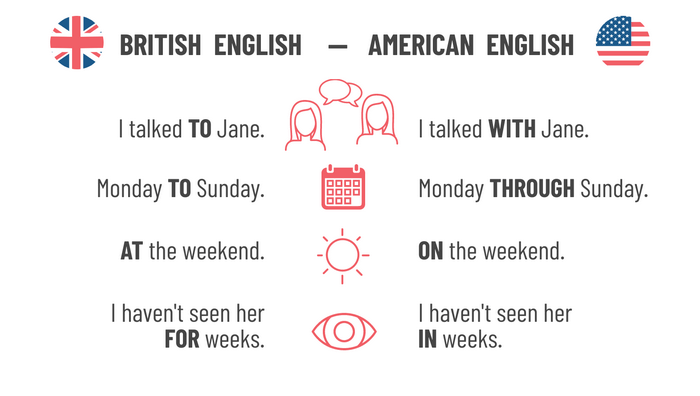
British English speakers say “at the weekend,” while American English uses “on the weekend.” Another example is “different to” or “different from” in British English, compared to the American preference for “different from” or “different than.”

These small differences may seem minor, but they add up. Search engines and native readers often subconsciously notice them.

Omission of Prepositions

American English sometimes omits prepositions that British English retains. For instance, Americans say “Monday through Friday,” while British speakers usually say “Monday to Friday.”

Again, consistency is more important than choosing one as “better.”

Use of Articles

Articles like “the,” “a,” and “an” are used slightly differently across the two varieties.

British English often includes “the” in phrases where American English drops it. A common example is “in hospital” versus “in the hospital.” British English focuses on the activity or condition, while American English refers more to the physical place.

The same pattern appears with “at university” and “at the university.”

Understanding this difference helps writers avoid sounding unnatural to their target audience.

Auxiliary Verbs and Modal Usage

Shall vs Will

“Shall” is more common in British English, especially in formal writing or polite suggestions. For example, “Shall we begin?”

In American English, “shall” is rare outside of legal or very formal contexts. Americans almost always use “will,” as in “Will we begin?”

If your content is aimed at a US audience, frequent use of “shall” can feel outdated or overly formal.

Need and Have Got

British English commonly uses “have got” to express possession, such as “I have got a new phone.” American English prefers the simpler “I have a new phone.”

Similarly, British English sometimes uses “needn’t,” while American English uses “don’t need to.”

Spelling Differences That Affect Grammar Perception

Although spelling is not grammar itself, it strongly influences how grammar is perceived.

British English uses spellings like “organise,” “colour,” and “centre.” American English prefers “organize,” “color,” and “center.”

Mixing spelling systems within the same article is one of the fastest ways to lose credibility, especially for SEO-focused websites. Choose one standard and apply it consistently across all pages.

Punctuation and Quotation Marks

British and American English differ in punctuation rules, particularly with quotation marks.

British English often places punctuation outside quotation marks unless it is part of the quoted material. American English almost always places commas and periods inside quotation marks.

For example, American English writes: She said, “It’s done.”
British English may write: She said, “It’s done”.

While subtle, these details matter for professional-level writing.

Which Grammar Style Should You Use for SEO?

From an SEO perspective, American English is generally more dominant due to the size of the US market and search volume. However, British English is more appropriate if your audience is based in the UK, Australia, or other Commonwealth countries.

The key rule is not which version you choose, but how consistently you apply it. Search engines value clarity, coherence, and user experience. Mixing British and American grammar can reduce readability and trust.

For PBN content, clean grammar, natural flow, and a clear language identity help pages look more authentic and less automated.

Final Thoughts on British vs American Grammar Differences

British and American English are two sides of the same coin. Their grammar differences reflect history, culture, and evolving language habits rather than strict right or wrong rules.

By understanding these distinctions, writers can produce more natural, targeted, and effective content. Whether you choose British or American grammar, consistency is your strongest asset.

For SEO and PBN purposes, well-structured writing with a clear grammatical identity not only improves rankings but also builds long-term credibility with readers and search engines alike.

Februari 5, 2026 | Lumeyesy

Grammar Rules That Change Meaning Into Horror

Grammar Rules That Change Meaning Into Horror

Grammar Rules That Change Meaning Into Horror – Grammar is often thought of as the backbone of good writing, a set of rules to keep our sentences clear and precise. But what happens when these rules are broken—or bent just slightly? Suddenly, your words can shift from being clear to downright horrifying, and not in the fun, spooky way you might expect. In this article, we’ll explore how small grammar mistakes or twists can change meaning drastically, sometimes creating unintended terror in your writing.

The Power of Commas: Pause for Effect—or Panic

Commas are deceptively small but can wield immense power over meaning. A misplaced comma can turn a friendly sentence into something that sounds eerie or sinister. Consider the difference between these two sentences:

“Let’s eat, Grandma.”
“Let’s eat Grandma.”

One comma transforms a loving invitation into a horrifying act of cannibalism. This is a classic example, but the point is clear: punctuation isn’t just about following rules—it’s about preventing unintended meaning.

Commas can also create suspense or unease in longer sentences. For instance, in horror writing, a well-placed pause can make the reader hesitate, building tension. In everyday writing, however, misuse can confuse or shock your audience in ways you didn’t intend.

Subject-Verb Agreement: When the Sentence Rebels

Subject-verb agreement is another rule that seems basic, yet breaking it can make your sentences unexpectedly creepy or confusing. Imagine a simple description gone wrong:

“The shadows moves along the walls.”

Here, the plural “shadows” mismatched with “moves” gives an unnatural, almost ghostly quality to the sentence. The mind unconsciously senses that something is off, which can create a subtle unease in the reader. In horror, this can actually be used deliberately to evoke discomfort, but in standard writing, it’s usually a source of accidental strangeness.

Pronouns: Ambiguity That Haunts

Pronouns are meant to clarify who or what you’re talking about. But when misused, they can turn clarity into confusion—or horror. Consider:

“She looked at her in the dark.”

Who is “she”? Who is “her”? The ambiguity can create a sense of dread, as if a sinister presence is lurking just beyond comprehension. This isn’t just a stylistic quirk; it’s a natural byproduct of sloppy grammar. In horror writing, authors might exploit this to leave readers unsettled, but in everyday writing, pronoun misuse often leads to confusion or misinterpretation.

Misplaced Modifiers: Accidental Monsters

Modifiers describe or limit other words, but when misplaced, they can produce sentences that sound unintentionally monstrous. For example:

“Covered in blood, the detective examined the scene.”

This sentence seems clear, but imagine if we misplace the modifier:

“The detective examined the scene covered in blood.”

Suddenly, the detective is the one covered in blood, creating an unintended and grisly image. Misplaced modifiers are a subtle way grammar can transform meaning into something horrific without the writer intending it.

Tense Confusion: When Time Itself Becomes Creepy

Verb tense is meant to orient the reader in time. When used inconsistently, it can make events feel disjointed or even surreal. For instance:

“She walks into the house and found the door open.”

The sudden shift from present to past creates a jarring effect. In horror writing, this could simulate disorientation, making the reader feel unsteady. In non-fiction or casual writing, it simply feels wrong and can turn a simple story into something unintentionally unsettling.

Apostrophes: Tiny Marks, Big Consequences

Apostrophes are tiny but mighty. They can completely change meaning when misplaced. For example:

“The ghost’s whispers were terrifying.” versus “The ghosts’ whispers were terrifying.”

One little apostrophe alters whether there is one ghost or many. Even more perilous is:

“Its cold grip was everywhere.” versus “It’s cold grip was everywhere.”

A misplaced apostrophe can break immersion or confuse the reader, sometimes creating a subtle, creeping sense of wrongness that’s perfect for horror—or frustrating for everyday writing.

Word Choice and Homophones: Horror in Disguise

Homophones—words that sound the same but have different meanings—are infamous for creating accidental horror. For example:

“The knight approached the haunted hall.” versus “The night approached the haunted hall.”

A single misused word can shift your scene from a medieval adventure to a potentially terrifying, uncanny scenario. For PBN sites and other content-driven platforms, paying attention to these small errors ensures your text communicates exactly what you intend—without accidental frights.

How Grammar Can Be Used Deliberately in Horror

Interestingly, many of the “horrors” we’ve discussed aren’t always mistakes. Skilled writers can intentionally bend grammar rules to evoke unease. Fragmented sentences, mismatched tenses, ambiguous pronouns—all of these can make readers uncomfortable in the right context. For instance, horror authors often use short, choppy sentences to simulate panic, while shifting tenses or ambiguous references keep readers on edge.

For SEO-focused PBN content, it’s less about scaring readers and more about understanding how grammar impacts meaning. But for creative writing, these “mistakes” can become tools to craft tension, suspense, or outright fear.

Conclusion: Small Rules, Big Impact

Grammar isn’t just about following rules—it’s about controlling meaning. Misplaced commas, mismatched verbs, ambiguous pronouns, and other small errors can turn an ordinary sentence into something unintentionally horrifying. Understanding these rules helps you avoid confusion in your writing, and in some contexts, allows you to harness grammar itself as a tool for creative effect.

Whether you’re writing for PBN sites, blogging, or crafting fiction, paying attention to these subtleties ensures your message lands as intended—and prevents accidental nightmares on the page. Grammar may seem boring, but as we’ve seen, even the smallest misstep can have a surprisingly dramatic effect.

Februari 5, 2026 | Lumeyesy

A Practical Guide to English Grammar for Everyday Writing

A Practical Guide to English Grammar for Everyday Writing

A Practical Guide to English Grammar for Everyday Writing – Writing in English can feel challenging, especially when it comes to grammar. Even experienced writers sometimes struggle with sentence structure, punctuation, or word choice. The good news is that you don’t need to memorize every rule to write clearly and effectively. Understanding the essentials of grammar and applying them consistently can make your everyday writing more confident and professional.

This guide is designed to help you navigate English grammar in practical ways, focusing on the aspects that matter most for daily communication, emails, social media posts, reports, and personal writing.

Why Grammar Matters in Everyday Writing

Grammar is often seen as a set of strict rules, but at its core, it’s a tool for communication. Good grammar helps your reader understand your message without confusion. In everyday writing, proper grammar can make a difference in how you are perceived. Clear sentences, correct punctuation, and smooth word flow create a sense of professionalism and attention to detail.

On the other hand, small mistakes can distract readers or even change the meaning of your message. Mastering grammar for everyday writing isn’t about perfection—it’s about clarity, consistency, and ease of reading.

Common Grammar Challenges

Sentence Structure and Word Order

One of the most common difficulties in English writing is sentence structure. English generally follows a Subject-Verb-Object order. For example: “She reads a book.” This seems simple, but complexity increases when adding modifiers, clauses, or extra information.

To improve clarity:

  • Keep your subject and verb close together.

  • Avoid long chains of clauses unless necessary.

  • Break long sentences into two for readability.

Verb Tenses and Consistency

Verb tenses indicate time, but using them inconsistently can confuse readers. A typical error is mixing past and present tenses within the same paragraph. For example: “I go to the store yesterday and bought some fruit.” The sentence should be: “I went to the store yesterday and bought some fruit.”

For everyday writing, focus on using tenses that match the timeline of events and be consistent throughout your text.

Articles and Determiners

Articles such as “a,” “an,” and “the” can be tricky for many learners. They are small words but significantly impact clarity.

  • Use “a” or “an” for general, non-specific items: “I need a pen.”

  • Use “the” for specific items already mentioned or known: “I found the pen you lost.”

The key is reading and exposure. The more you see articles used correctly, the more natural their use becomes.

Tips for Everyday Writing

Keep Sentences Clear and Direct

Everyday writing benefits from simplicity. Avoid overcomplicating sentences with too many ideas. Each sentence should ideally express one main thought.

For example, instead of writing: “I was thinking that maybe we could, if you have time, discuss the project plan tomorrow,”
you can simplify it to: “If you have time, let’s discuss the project plan tomorrow.”

Clear sentences improve readability and reduce grammar mistakes.

Read and Imitate Good Writing

One of the best ways to internalize grammar is to read well-written material. Look for articles, blogs, or books with strong grammar and sentence flow.

When you notice a sentence you like, analyze it:

  • How is the subject positioned?

  • Which verb tense is used?

  • How are modifiers and clauses arranged?

Over time, you’ll naturally adopt these patterns in your own writing.

Use Punctuation Wisely

Punctuation is the signpost of your writing. Commas, periods, colons, and semicolons help the reader navigate your sentences. Incorrect punctuation can obscure meaning.

A few practical rules for everyday writing:

  • Use periods to separate complete thoughts.

  • Use commas to divide clauses or list items.

  • Avoid overusing semicolons unless you are confident with them.

Simple punctuation habits go a long way in improving clarity.

Improving Grammar Through Practice

Daily Writing Habits

The most effective way to improve grammar is through consistent writing. Journaling, short essays, emails, or even social media posts can help. The goal is to apply grammar actively rather than passively memorizing rules.

Start small: write a paragraph each day focusing on a specific grammar point, like verb tenses or sentence structure. Gradually, these habits build a solid foundation.

Review and Revise

Editing your writing is as important as writing itself. First drafts often contain small grammar errors that are easy to fix on revision.

When reviewing:

  • Read your text aloud to catch awkward phrasing.

  • Check for verb tense consistency.

  • Ensure punctuation and articles are used correctly.

Revision turns raw ideas into polished, professional writing.

Common Mistakes to Avoid

Even experienced writers fall into common traps. Some everyday mistakes include:

  • Mixing singular and plural subjects: “The team are ready” vs. “The team is ready.”

  • Using incorrect verb forms: “He run every day” instead of “He runs every day.”

  • Confusing words that sound alike: “there,” “their,” and “they’re.”

Being aware of these patterns allows you to catch errors before they become habits.

The Role of Grammar in Professional Writing

Grammar matters most when your writing represents you professionally. Emails, reports, proposals, and presentations benefit from correct grammar because it conveys competence and attention to detail.

Even small improvements in sentence clarity and word choice can significantly impact how your writing is received. Well-structured sentences create authority, while sloppy grammar can distract or mislead the reader.

Making Grammar Work for You

Grammar is not a set of restrictions; it is a toolkit. Once you understand the rules and common patterns, you can use them to make your writing stronger and more expressive.

Focus on:

  • Clarity over complexity.

  • Consistency over memorization of every exception.

  • Regular practice and revision to reinforce skills.

When grammar becomes a natural part of your writing process, everyday writing no longer feels daunting. Instead, it becomes a way to communicate clearly, creatively, and confidently.

Final Thoughts

English grammar for everyday writing doesn’t have to be intimidating. By focusing on practical rules, clear sentence structures, and consistent practice, anyone can improve their writing.

The goal is not to achieve perfection but to make your ideas understandable and engaging. Grammar is a tool, not a burden, and using it effectively enhances every piece of writing you create.

With patience, reading, and daily practice, everyday writing can become both effortless and enjoyable, making your English communication more powerful and professional.

Februari 5, 2026 | Lumeyesy

Why English Grammar Feels Hard and How to Master It Easily

Why English Grammar Feels Hard and How to Master It Easily

Why English Grammar Feels Hard and How to Master It Easily – For many learners, English grammar feels confusing, frustrating, and sometimes overwhelming. You study the rules, memorize formulas, and still feel unsure when writing or speaking. One sentence sounds right, another feels wrong, but you cannot explain why. This experience is extremely common, even for people who have studied English for years.

The truth is, English grammar is not impossible. It only feels hard because it is often taught in a way that does not match how the language is actually used. Once you understand why grammar feels difficult and how to approach it differently, mastering English grammar becomes much easier and more natural.

Why English Grammar Feels So Difficult

English grammar is not hard because learners are slow. It feels hard because of how the rules are structured and how they are usually explained.

Too Many Rules With Too Many Exceptions

One of the biggest problems with English grammar is the number of exceptions. You learn one rule, then immediately learn three situations where the rule does not apply. This makes learners feel like grammar is random and unreliable.

For example, verb tenses follow patterns, but then irregular verbs appear and break those patterns. Articles like “a,” “an,” and “the” seem simple, yet native speakers use them based on feeling rather than strict logic. This creates confusion for learners who want clear, fixed rules.

Grammar Is Often Taught Without Context

Many people learn grammar through isolated sentences that have no real meaning. You fill in blanks, choose correct answers, and memorize structures, but you rarely see how grammar works in real conversations or writing.

Without context, grammar feels abstract. It becomes a set of rules to remember instead of a tool for communication. This gap between theory and real usage makes grammar feel harder than it actually is.

Fear of Making Mistakes

Another reason English grammar feels difficult is psychological. Many learners are afraid of making mistakes. They stop themselves while speaking or writing because they want to be correct.

This fear slows progress. Grammar becomes a barrier instead of a guide. The more you worry about being perfect, the harder it feels to use grammar naturally.

Why Native Speakers Do Not Think About Grammar

One important thing learners often forget is that native speakers do not actively think about grammar rules. They do not analyze tenses or sentence structures before speaking. They rely on familiarity and exposure.

This does not mean grammar is useless. It means grammar should support understanding, not control it. When learners try to use grammar like a mathematical formula, it feels heavy and stressful.

Understanding this difference helps shift your mindset. Grammar mastery is not about memorizing every rule. It is about building a sense of what sounds right.

How to Master English Grammar More Easily

Once you change your approach, learning English grammar becomes much more manageable. The goal is not perfection, but clarity and confidence.

Focus on Patterns, Not Rules

Instead of memorizing long explanations, focus on common patterns. English grammar repeats itself more than most learners realize. Certain sentence structures appear again and again in daily communication.

When you notice patterns in reading and listening, grammar becomes predictable. Over time, your brain starts recognizing correct structures automatically.

Learn Grammar Through Real Examples

Grammar makes more sense when it is connected to real language. Reading articles, blogs, short stories, and conversations helps you see how grammar works naturally.

When you encounter a sentence you like, pay attention to its structure. Ask yourself why it works. This method builds understanding without forcing memorization.

Practice Small, Consistent Writing

Writing short texts regularly is one of the most effective ways to improve grammar. You do not need long essays. Simple daily writing helps reinforce correct structures.

The key is consistency. Small practice sessions are better than long, irregular study sessions. Grammar improves through repetition, not pressure.

Common Grammar Areas That Cause Confusion

Some grammar topics feel harder than others, especially for non-native speakers.

Verb Tenses and Time Awareness

English uses many tenses to express time, but in real life, only a few are used most often. Present simple, past simple, and present perfect cover the majority of daily communication.

Learners struggle when they try to master all tenses at once. Focusing on the most common ones first makes grammar feel lighter and more logical.

Articles and Word Choice

Articles are difficult because many languages do not use them the same way English does. Instead of memorizing rules, exposure is the best teacher.

By reading and listening regularly, you begin to sense when an article is needed. This feeling develops naturally over time.

Sentence Structure and Word Order

English sentence structure is actually quite stable. Subject, verb, and object usually follow a clear order. Problems arise when learners translate directly from their native language.

Thinking in English, rather than translating, helps sentence structure become more natural and accurate.

Building Confidence With English Grammar

Confidence plays a huge role in grammar mastery. When learners feel confident, they use grammar more freely and learn faster.

Accept Imperfection as Part of Learning

Mistakes are not a sign of failure. They are proof that you are using the language. Every fluent speaker made thousands of grammar mistakes before becoming comfortable.

The goal is communication, not flawless grammar. As long as your message is clear, you are doing it right.

Improve Grammar Through Feedback

Feedback helps you notice patterns in your mistakes. When the same type of error appears repeatedly, it becomes easier to fix.

Correcting everything at once is not effective. Focus on one or two grammar points at a time to avoid overload.

English Grammar as a Skill, Not a Subject

The biggest shift in mastering English grammar is seeing it as a skill, not an academic subject. Grammar exists to support meaning, clarity, and expression.

When you stop treating grammar as a test and start using it as a tool, it becomes lighter and more intuitive. You no longer ask, “Is this rule correct?” but instead, “Does this sound clear?”

This mindset change is what separates struggling learners from confident users of English.

Final Thoughts

English grammar feels hard because it is often taught in a rigid, disconnected way. Too many rules, too little context, and too much fear of mistakes create unnecessary stress.

Mastering grammar becomes easier when you focus on patterns, real examples, and consistent practice. You do not need to know every rule to communicate effectively. You only need to understand how grammar works in real life.

With patience and the right approach, English grammar stops being an obstacle and becomes a natural part of how you express your thoughts clearly and confidently.

Februari 2, 2026 | Lumeyesy

Simple English Grammar Rules People Often Get Wrong

Simple English Grammar Rules People Often Get Wrong

Simple English Grammar Rules People Often Get Wrong – English grammar looks simple on the surface, but many learners and even native speakers still make the same mistakes again and again. These errors may seem small, yet they can affect clarity, professionalism, and credibility, especially in writing.

In this article, we will discuss simple English grammar rules people often get wrong, explain why they happen, and show how to fix them naturally. This guide is written in a friendly tone, easy to understand, and practical for everyday use.

Subject and Verb Agreement Confusion

One of the most common grammar problems in English is subject and verb agreement. This rule sounds basic, but it often becomes tricky in longer sentences.

A singular subject must use a singular verb, while a plural subject must use a plural verb. Problems usually appear when other words come between the subject and the verb.

For example, many people write “The list of items are on the table.” The real subject is “list,” not “items,” so the correct sentence is “The list of items is on the table.”

Collective Nouns and Agreement

Collective nouns such as team, family, or group also confuse writers. In American English, these words are usually treated as singular. So, “The team is winning” is considered correct, even though the team includes many people.

Understanding what the true subject is will help you avoid this mistake in most cases.

Using “Your” and “You’re” Incorrectly

This is a classic error that still appears everywhere, especially online. “Your” shows possession, while “you’re” is a contraction of “you are.”

When people write quickly, they often forget the difference. A simple trick is to replace “you’re” with “you are.” If the sentence still makes sense, then “you’re” is correct.

For example, “You’re going to love your new job” uses both forms correctly. Mixing them up can make writing look careless, even if the message is clear.

Confusion Between “Its” and “It’s”

Another small apostrophe mistake that causes big confusion is between “its” and “it’s.” “It’s” means “it is” or “it has,” while “its” shows possession.

A sentence like “The company changed it’s policy” is incorrect. The correct form is “The company changed its policy.”

This mistake is common because most possessive nouns in English use apostrophes, but “its” is an exception.

Run-On Sentences and Comma Splices

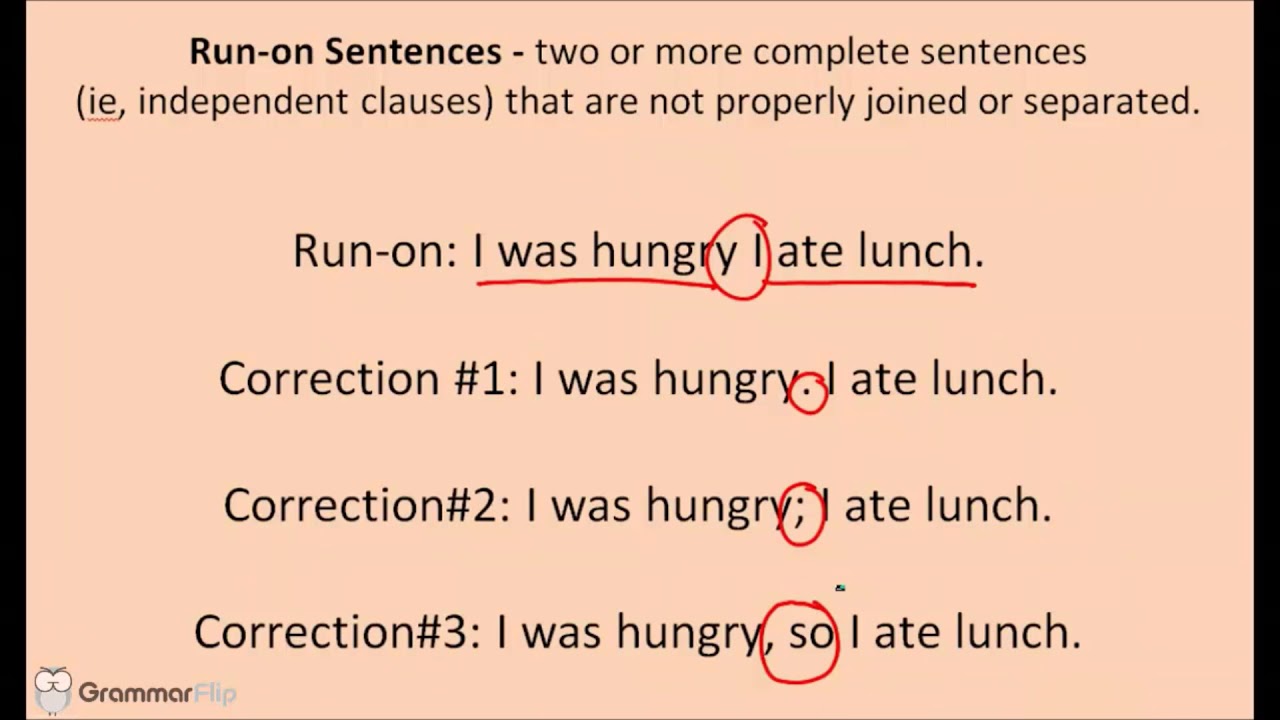
Run-on sentences happen when two complete ideas are joined without proper punctuation. Comma splices are a specific type of run-on sentence where a comma is used instead of a period or conjunction.

For example, “I finished the report, I sent it to my manager” is incorrect. These are two independent sentences.

You can fix this by adding a conjunction, changing the comma to a period, or restructuring the sentence. Simple fixes like these make writing much easier to read.

Overusing or Misusing Commas

Commas are helpful, but too many commas can be just as confusing as too few. Many writers place commas where they feel a pause, not where grammar rules require them.

A common mistake is putting a comma between a subject and verb, such as “My brother, works in marketing.” This comma should not be there.

Commas After Introductory Phrases

On the other hand, commas are often missing after introductory phrases. For example, “After finishing the project we took a break” should include a comma after “project.”

Learning basic comma rules improves sentence flow and prevents misunderstandings.

Mixing Up “Then” and “Than”

“Then” relates to time or sequence, while “than” is used for comparisons. Even though the difference is simple, many people still confuse them.

For example, “She is taller then her sister” is incorrect. The correct sentence is “She is taller than her sister.”

This mistake often happens because both words sound similar when spoken quickly.

Incorrect Use of Articles: A, An, and The

Articles are a major challenge for non-native English speakers. English uses “a” and “an” for general nouns and “the” for specific ones.

A common error is saying “She is the doctor” when the speaker means any doctor, not a specific one. In that case, “She is a doctor” is more natural.

Understanding whether a noun is general or specific helps you choose the right article.

Confusion Between Countable and Uncountable Nouns

Some nouns in English cannot be counted individually, such as information, advice, and furniture. These words do not have plural forms, but many learners try to add “s” to them.

For example, “many informations” is incorrect. The correct phrase is “a lot of information.”

This mistake often comes from translating directly from another language.

Using the Wrong Prepositions

Prepositions are small words, but they cause big problems. Common examples include confusing “in,” “on,” and “at,” or “for” and “since.”

There is no single rule that works for all situations, which makes prepositions difficult. The best way to learn them is through exposure and practice, not memorization alone.

Reading English content regularly helps you notice which prepositions sound natural in different contexts.

Mixing Past Simple and Present Perfect

Many English learners struggle with the difference between past simple and present perfect. Past simple refers to a finished time, while present perfect connects the past to the present.

For example, “I have seen him yesterday” is incorrect. “Yesterday” is a finished time, so the correct sentence is “I saw him yesterday.”

This rule becomes clearer when you focus on time expressions.

Conclusion

Simple English grammar rules are often overlooked because they seem obvious. However, these small mistakes appear frequently in everyday writing and speech. By understanding why they happen and paying attention to common patterns, you can improve your English naturally.

Good grammar does not mean perfect grammar. It means clear communication. With consistent reading, writing, and awareness, avoiding these common grammar mistakes becomes much easier over time.

Februari 1, 2026 | Lumeyesy

Practical English Grammar for Daily Writing and Speaking

Practical English Grammar for Daily Writing and Speaking

Practical English Grammar for Daily Writing and Speaking – Mastering English grammar is often seen as a daunting task, but in reality, understanding practical grammar rules can make daily writing and speaking much easier. Whether you are writing emails, chatting with friends, or giving presentations, a solid grasp of grammar helps you communicate clearly and confidently. This article explores practical English grammar tips that you can apply every day to improve both your writing and speaking skills.

Why Practical Grammar Matters

Grammar is more than just rules; it is the framework that ensures your ideas are understood. Misplaced words or incorrect tenses can confuse your reader or listener, even if your vocabulary is strong. Practical grammar focuses on what is most useful for daily communication rather than memorizing every rule in a textbook.

For example, using the correct tense in a short story or during a conversation about yesterday’s events prevents misunderstandings. Similarly, understanding sentence structure helps you express thoughts logically and fluently.

Everyday Benefits of Good Grammar

Using proper grammar in daily life has tangible benefits. It enhances clarity, making your writing easier to read and your speech easier to follow. For professionals, it creates a positive impression, showing attention to detail and effective communication skills. For students, it supports academic success by improving essays, reports, and presentations.

Most importantly, grammar provides confidence. When you know your sentences are correct, you can focus on your ideas rather than worrying about mistakes.

Common Grammar Challenges

Many English learners face similar challenges, especially when it comes to daily communication. Recognizing these challenges helps in addressing them effectively.

Tense Confusion

Tenses are one of the most common difficulties. Choosing between past, present, and future tenses can be tricky, especially in casual conversation where time references can shift quickly. Practical grammar focuses on using the most common tenses correctly. For example, simple past is often enough when telling a story about yesterday, while present continuous works well for ongoing actions.

Subject-Verb Agreement

Matching the subject with the correct verb form is another frequent problem. Errors like “He go to school” instead of “He goes to school” can distract the listener or reader. Daily practice with common verbs and subject forms improves accuracy and fluency.

Sentence Structure and Word Order

English word order can differ from other languages. Mistakes in sentence structure can make statements unclear. Learning the basic order—subject, verb, object—helps construct sentences that sound natural in both writing and speaking.

Practical Grammar Tips for Writing

Writing clearly and correctly requires more than just spelling and vocabulary. Applying practical grammar rules ensures your messages are easy to read and understand.

Use Simple Sentences

Simple sentences are often more effective than complex ones. Instead of stacking multiple clauses, focus on one idea per sentence. This improves readability and reduces mistakes. For instance, “I finished my homework. Then I watched a movie” is clearer than “After finishing my homework, I watched a movie, which was very interesting and relaxing.”

Consistent Tense Usage

Maintaining the same tense within a paragraph prevents confusion. When writing about past events, stick to past tense unless a shift is necessary. Consistency keeps your reader oriented in time and makes your writing flow naturally.

Correct Punctuation

Punctuation is a small but powerful part of grammar. Commas, periods, and question marks organize sentences and signal pauses. Proper punctuation in emails or reports can prevent misinterpretation and make your writing more professional.

Avoid Overuse of Passive Voice

While passive voice is grammatically correct, overusing it can make sentences less direct. Active voice usually sounds more natural in daily writing. For example, “The manager approved the report” is clearer than “The report was approved by the manager.”

Practical Grammar Tips for Speaking

Grammar in speaking is less formal but equally important. Clear speech requires correct sentence patterns, verb forms, and word order.

Speak in Complete Sentences

Even in casual conversation, try to speak in complete sentences when possible. This habit helps listeners understand you better and reduces the chance of miscommunication. For example, instead of saying “Yesterday… went park,” say “Yesterday I went to the park.”

Use Contractions Naturally

Contractions like “I’m,” “don’t,” and “we’re” make spoken English sound natural. They also help you speak faster and more fluently without breaking grammar rules.

Listen and Repeat

Listening to native speakers and repeating phrases can improve both pronunciation and grammar instincts. Focus on how sentences are structured and try to mimic the rhythm and word order. This builds practical grammar skills that feel intuitive rather than forced.

Practice Common Phrases

Everyday conversations often rely on recurring phrases and sentence patterns. Learning these phrases helps you apply grammar correctly without thinking too much. For example, “I have been to…,” “Can you help me with…,” and “I would like to…” are widely used in daily speech.

Integrating Grammar Into Daily Life

The key to mastering practical grammar is integration into daily activities. Grammar is learned best when used actively rather than studied passively.

Writing Journals or Notes

Keeping a journal or writing daily notes in English encourages the practical application of grammar rules. Even simple entries like “Today I went to the market and bought fruits” reinforce sentence structure and tense usage.

Speaking With Friends or Online Partners

Conversing with others in English provides real-time feedback and forces you to use correct grammar spontaneously. Online language exchange platforms or conversation clubs can provide low-pressure environments to practice.

Reading Regularly

Reading books, articles, and even social media posts exposes you to correct grammar in context. Notice sentence structures, punctuation, and tense usage as you read. Over time, these patterns become intuitive.

Revising Your Writing

Always take time to review your writing. Checking for tense consistency, subject-verb agreement, and sentence clarity turns mistakes into learning opportunities.

The Role of Grammar in Confidence and Professional Growth

Practical grammar is not just about correctness; it is about confidence and credibility. Clear writing and speech create a professional image, whether in emails, presentations, or interviews. People are more likely to understand and trust you when your communication is grammatically sound.

For learners, every small improvement in grammar strengthens confidence. When you know you are understood, you can focus on expressing ideas, telling stories, or persuading others rather than worrying about mistakes.

Conclusion

Practical English grammar is essential for effective daily writing and speaking. By focusing on common challenges like tenses, subject-verb agreement, and sentence structure, learners can communicate clearly and confidently. Applying grammar in everyday writing, speaking, and reading activities reinforces learning and makes it feel natural.

Remember, grammar is a tool, not a burden. Simple and consistent practice can make a huge difference, allowing you to express ideas fluently, make a strong impression, and build confidence in both personal and professional settings.

By understanding and using practical grammar rules, anyone can transform everyday communication into a clear, confident, and professional skill. The key is regular use, active practice, and paying attention to how language works in real-life situations.

Februari 1, 2026 | Lumeyesy

Understanding English Grammar Through Real Usage Examples

Understanding English Grammar Through Real Usage Examples

Understanding English Grammar Through Real Usage Examples – Learning English grammar can often feel overwhelming. Rules, exceptions, and endless verb forms can make even the most enthusiastic learners feel stuck. But the secret to mastering English grammar isn’t memorizing every rule—it’s seeing how English is actually used in real life. When you study grammar through real usage examples, you not only understand the rules but also learn how to apply them naturally in conversation and writing.

Why Real Examples Matter More Than Rules

Traditional grammar books tend to focus on rules and charts. While this is useful, it can also be limiting. Grammar doesn’t exist in a vacuum; it comes alive when it’s part of a sentence, a story, or a conversation. Real usage examples help learners see patterns in how native speakers actually communicate.

For instance, consider the present perfect tense. A rule book might tell you it is formed with “has/have + past participle.” But seeing sentences like, “I’ve visited Paris three times” or “She hasn’t called me today” makes the concept clear in context. You understand not just the structure, but also the situations in which it is naturally used.

Using Context to Remember Grammar

One of the most effective ways to internalize grammar is through context. Context helps your brain connect the rule to its practical use, making it easier to recall when speaking or writing.

Take prepositions, for example. They are notoriously tricky because they rarely translate directly between languages. By studying sentences like, “He is interested in music” or “She is good at drawing,” you start to see patterns rather than memorizing lists of prepositions. These small, repeated examples from real conversations can dramatically improve your fluency.

The Power of Listening and Reading

Another way to encounter real examples is through listening and reading. Movies, podcasts, and everyday conversations are treasure troves of natural English. Even reading books, news articles, and blogs exposes you to grammar in action. You notice how adjectives are used, how tenses shift in storytelling, and how questions and negations are formed.

The key is to pay attention to the patterns. Don’t just read; observe. Highlight sentences that feel natural or particularly expressive. Later, try to use them in your own writing or speaking. Over time, these patterns become second nature.

Common Grammar Points Made Clear Through Examples

Certain grammar points can be tricky, but examples make them much easier to grasp. Here are a few cases:

Articles: a, an, and the

Articles are small words but cause big headaches for learners. Seeing them in context is crucial. For example, “I saw a cat in the garden” versus “The cat in the garden was sleeping” shows how the article changes meaning. Real examples demonstrate when to use “a” for general mentions and “the” for specific ones.

Conditionals in Everyday Speech

Conditionals can also be confusing. By observing sentences like, “If it rains, we will stay inside” or “If I were rich, I would travel the world,” learners see the structure and meaning clearly. Real conversations often mix zero, first, second, and third conditionals naturally, which helps learners understand the subtle differences.

Common Verb Tenses

Verb tenses are more than just rules; they are tools for expressing time and intention. Examples like, “I am reading a book” versus “I read that book last week” demonstrate the difference between present continuous and simple past instantly. The more examples you encounter, the more intuitively you grasp tense usage.

Making Examples Work for You

Seeing examples is just the first step. The next step is actively using them. Try to mimic sentences you encounter, replacing words to suit your own ideas. This practice strengthens memory and fluency.

For example, if you learn the sentence, “She has been working here for five years,” try changing it: “He has been studying English for two months” or “They have been living in London since 2020.” This method reinforces grammar patterns and makes them feel natural rather than forced.

Writing and Speaking Exercises

One of the most effective ways to internalize grammar through examples is by writing short paragraphs or dialogues using sentences you have learned. Even speaking to yourself using these sentences helps solidify patterns in your mind.

Reading aloud is also a great tool. It helps you notice rhythm, intonation, and natural pauses that are often lost in silent reading. Over time, speaking and writing become easier because your brain has a ready-made library of real examples to draw from.

Why This Approach is Better for Long-Term Learning

Studying grammar through real examples is more sustainable than memorizing rules alone. When learners rely only on rules, they often forget them in real-life situations. Real examples create mental associations, turning grammar from abstract rules into usable language.

Moreover, using examples helps you sound more natural. You start to develop an ear for how native speakers talk, which reduces the common mistake of overthinking grammar while speaking. This approach also encourages learners to experiment with language in a safe way, building confidence and fluency.

Conclusion

Understanding English grammar doesn’t have to be a chore. By focusing on real usage examples, you learn grammar in context, making it easier to remember and use naturally. Listening, reading, writing, and speaking with examples in mind will gradually transform your skills from mechanical repetition to fluid, confident communication.

So next time you study a grammar point, don’t just memorize the rule. Look for examples, notice patterns, and practice creating your own sentences. Grammar becomes not a set of obstacles but a toolkit for expressing yourself clearly and confidently in English.

By embracing this approach, English learners can finally move past theory and into real, practical language use, making their learning experience enjoyable, effective, and long-lasting.

Januari 30, 2026 | Lumeyesy

Simple English Grammar Rules Everyone Should Know

Simple English Grammar Rules Everyone Should Know

Simple English Grammar Rules Everyone Should Know – English grammar does not have to feel complicated or intimidating. Many people believe they need to memorize dozens of rules to speak or write good English, but in reality, mastering a few basic principles can make a huge difference. Whether you are a beginner, a casual learner, or someone who uses English for work or online content, understanding simple grammar rules helps you communicate clearly and confidently.

This article covers essential English grammar rules that everyone should know. These rules are practical, easy to remember, and commonly used in everyday English. By focusing on the basics, you can improve your writing, avoid common mistakes, and sound more natural.

Why Learning Basic English Grammar Matters

Grammar is the structure that holds language together. Without it, sentences become confusing or misleading. Simple grammar rules help your ideas flow logically and make your message easier to understand.

For online content, grammar also plays an important role in readability. Search engines prefer content that is clear, well-structured, and user-friendly. When your writing is easy to read, people stay longer on the page, which can improve engagement and SEO performance.

You do not need perfect grammar to communicate well, but knowing the basics gives you a strong foundation.

Sentence Structure: Keep It Simple

One of the most important grammar rules is understanding how sentences work. In English, most sentences follow a simple pattern: subject, verb, and object.

A subject is who or what the sentence is about. The verb shows the action or state. The object receives the action. Keeping this structure clear makes your sentences easier to read.

Short and direct sentences are often more effective than long, complicated ones. If a sentence feels confusing, it is usually better to split it into two simpler sentences.

Complete Sentences vs Fragments

A complete sentence must have at least a subject and a verb. Sentence fragments are incomplete thoughts and can confuse readers. While fragments are sometimes used in casual writing, full sentences are safer for general content and SEO-focused articles.

Verb Tenses: Use Them Consistently

Verb tense tells the reader when an action happens. The most common tenses in English are present, past, and future. One common mistake is switching tenses without a clear reason.

If you start writing in the present tense, try to stay in the present tense unless the meaning requires a change. Consistent verb tense makes your writing smoother and more professional.

Present Simple for General Facts

The present simple tense is often used for facts, habits, and general truths. This tense is especially useful for educational content and evergreen articles because it keeps the information relevant over time.

Subject and Verb Agreement

Subject and verb agreement means that the subject and the verb must match in number. A singular subject takes a singular verb, while a plural subject takes a plural verb.

This rule may sound basic, but it is one of the most common grammar mistakes, especially for non-native speakers. Paying attention to this detail can instantly improve the quality of your writing.

Common Agreement Mistakes

Mistakes often happen when the subject and verb are separated by extra words. Always focus on the main subject of the sentence, not the words in between.

Articles: A, An, and The

Articles are small words, but they play a big role in English grammar. The articles “a” and “an” are used for general or non-specific nouns, while “the” is used for something specific or already known.

Choosing the correct article helps your sentences sound natural. Although articles can be tricky at first, reading more English content helps you understand how they are used in real situations.

When Articles Are Not Needed

Sometimes, no article is used at all, especially with plural nouns or uncountable nouns when speaking generally. Knowing when to omit an article is just as important as knowing when to use one.

Prepositions: Small Words, Big Impact

Prepositions show relationships between words, such as time, place, and direction. Words like “in,” “on,” “at,” and “with” are used constantly in everyday English.

There is no single rule that explains all prepositions, so the best way to learn them is through exposure and practice. Using the wrong preposition may not always block understanding, but using the right one makes your English sound more fluent.

Capitalization and Punctuation Basics

Capitalization rules in English are fairly simple. Sentences should begin with a capital letter, and proper nouns should always be capitalized. Proper nouns include names of people, places, days, and months.

Punctuation helps guide the reader. Periods, commas, and question marks tell the reader how to interpret a sentence. Missing or incorrect punctuation can change the meaning or make the text harder to read.

Commas for Clarity

Commas are often used to separate ideas, list items, or add extra information. While overusing commas can be a problem, using them correctly improves clarity and flow.

Common Grammar Mistakes to Avoid

Some grammar mistakes appear again and again in English writing. Confusing “your” and “you’re” or “their,” “there,” and “they’re” is very common. These mistakes can reduce credibility, especially in online content.

Another frequent error is run-on sentences, where multiple ideas are joined without proper punctuation. Breaking long sentences into shorter ones usually solves this issue.

Writing Naturally with Correct Grammar

Good grammar should support your message, not overpower it. The goal is not to sound robotic or overly formal, but clear and natural. Simple grammar rules allow your personality and ideas to come through without confusion.

Reading your writing out loud is a useful trick. If something sounds awkward, it probably needs adjustment. Over time, correct grammar becomes more instinctive.

Final Thoughts on Simple English Grammar

Learning simple English grammar rules does not require advanced study or complicated explanations. By focusing on sentence structure, verb tense, agreement, and basic punctuation, anyone can improve their English.

These grammar rules are practical, easy to apply, and useful in everyday communication. Whether you are writing articles, emails, or online content, mastering the basics helps you sound confident and professional without losing your natural voice.

English grammar is a tool, not a barrier. With consistent practice and attention to the essentials, clear and effective communication becomes much easier.

Januari 27, 2026 | Lumeyesy

Simple Ways to Improve Your English Grammar Skills

Simple Ways to Improve Your English Grammar Skills

Simple Ways to Improve Your English Grammar Skills – Improving your English grammar does not have to be complicated or stressful. Many people think grammar means memorizing endless rules, but in reality, it is more about habit, exposure, and consistency. Whether you are learning English for work, study, or daily communication, small improvements can make a big difference in how confident and natural you sound.

This article will walk you through simple and practical ways to improve your English grammar skills without feeling overwhelmed. These methods are easy to apply, even if you are busy or learning English as a second language.

Why English Grammar Still Matters Today

Grammar is the foundation of clear communication. Even if your vocabulary is strong, poor grammar can make your message confusing or less professional. In emails, social media posts, blog writing, or business communication, correct grammar helps you sound more credible and trustworthy.

Good grammar also helps you understand others better. When you recognize sentence patterns and structures, reading and listening become much easier. This is why improving grammar is not just about writing, but about overall language fluency.

Start with Everyday Reading Habits

One of the simplest ways to improve English grammar is by reading regularly. Reading exposes you to correct sentence structures without forcing you to memorize rules.

Read Content That Matches Your Level

Choose materials that feel comfortable, not exhausting. Online articles, blogs, short stories, or news websites are great starting points. When the language feels natural, your brain starts absorbing grammar patterns automatically.

Pay attention to how sentences are formed. Notice how verbs change, how prepositions are used, and how ideas are connected. Over time, these patterns will feel familiar and easier to use in your own writing.

Read Out Loud Occasionally

Reading out loud helps connect grammar with sound. When a sentence sounds wrong, it often means the grammar is incorrect. This technique is especially helpful for understanding verb tenses and sentence flow.

Practice Writing in Small, Consistent Steps

You do not need to write long essays to improve your grammar. Short, consistent writing is much more effective.

Write Daily, Even If It’s Just a Few Sentences

Try writing a short journal entry, a social media caption, or a comment in English every day. Focus on clarity rather than perfection. The goal is to make grammar a natural part of your thinking process.

If possible, reread what you wrote and look for simple mistakes like verb tense, plural forms, or missing articles. Self-correction is a powerful learning tool.

Rewrite Simple Sentences in Different Ways

Take one sentence and rewrite it using a different structure. This exercise helps you understand how grammar works in real situations. Over time, you will feel more flexible and confident when forming sentences.

Learn Grammar Rules in Context, Not in Isolation

Studying grammar rules alone can feel boring and confusing. A better approach is to learn grammar through examples and real usage.

Focus on Common Grammar Mistakes First

Instead of trying to learn everything, focus on common issues such as subject-verb agreement, basic tenses, and sentence order. These areas have the biggest impact on clarity.

When you notice a mistake you often make, look it up and practice it in context. This targeted approach saves time and delivers faster results.

Use Real Examples from Native Content

Look at how native speakers use grammar in articles, blogs, or conversations. This helps you understand how rules apply in real life, not just in textbooks.

Improve Grammar Through Listening and Speaking

Grammar is not only about writing. Listening and speaking play a major role in reinforcing correct structures.

Listen to Natural English Conversations

Podcasts, interviews, and videos are excellent resources. When you listen to native speakers, you hear how grammar flows naturally in conversation.

Pay attention to commonly used phrases and sentence patterns. These patterns often repeat and become easy to remember.

Speak Without Fear of Mistakes

Many learners avoid speaking because they are afraid of grammar errors. In reality, mistakes are part of learning. Speaking regularly helps your brain process grammar faster and more naturally.

Try talking to yourself, recording short voice notes, or practicing with language partners. The more you speak, the more automatic correct grammar becomes.

Use Simple Tools Wisely

Technology can support your learning, but it should not replace your thinking process.

Grammar-checking tools are useful for spotting mistakes, but always review the suggestions carefully. Try to understand why something is incorrect instead of accepting corrections blindly. This awareness helps prevent repeating the same mistakes in the future.

Be Patient and Track Your Progress

Improving English grammar is a gradual process. You may not see dramatic changes overnight, but small improvements add up over time.

Notice Patterns, Not Perfection

Instead of aiming for perfect grammar, focus on reducing repeated mistakes. When you stop making the same error again and again, that is real progress.

Celebrate Small Wins

Understanding a sentence faster, writing more confidently, or speaking without hesitation are signs that your grammar skills are improving. These small wins keep you motivated.

Final Thoughts on Improving English Grammar Skills

Improving your English grammar does not require expensive courses or endless rule memorization. With regular reading, consistent writing, active listening, and simple practice habits, grammar improvement becomes a natural part of your daily routine.

The key is consistency and patience. When grammar learning feels connected to real life, it becomes easier, more enjoyable, and much more effective. Over time, you will notice that correct grammar no longer feels like a challenge, but a skill you use naturally and confidently.

Januari 27, 2026 | Lumeyesy

Why English Grammar Matters More Than You Think

Why English Grammar Matters More Than You Think

Why English Grammar Matters More Than You Think – Many people believe that English grammar is only important in classrooms, exams, or academic writing. In everyday life, grammar is often seen as optional, something that only teachers or editors truly care about. As long as the message is understood, grammar feels secondary.

In reality, English grammar plays a much bigger role than most people realize. It quietly shapes how messages are received, how ideas are interpreted, and how credible a person appears in both written and spoken communication. Whether you are sending emails, writing content online, or speaking in professional settings, grammar influences more than just correctness.

Grammar Shapes How Your Message Is Understood

Grammar is not just about rules. It is about structure and clarity. When grammar is used properly, ideas flow naturally and meaning becomes clear. When it is ignored, even simple messages can become confusing or misleading.

A sentence with poor grammar may still be readable, but the reader often has to work harder to understand it. Over time, this extra effort can lead to misunderstandings or frustration.

Clarity Comes From Structure

English relies heavily on word order and sentence structure. A small grammatical mistake can change the meaning of a sentence entirely. This is especially important in written communication, where tone and body language are absent.

Clear grammar helps ensure that your message says exactly what you intend, without forcing the reader to guess.

Grammar Builds Credibility and Trust

One of the hidden impacts of English grammar is how it affects credibility. People naturally associate good grammar with professionalism, education, and attention to detail. This happens subconsciously, even when readers are not actively judging.

In professional environments, grammar can influence how seriously your message is taken.

First Impressions Matter

Emails, reports, proposals, and online profiles often create a first impression before any conversation happens. If the writing contains frequent grammar mistakes, readers may question the reliability of the information or the competence of the writer.

On the other hand, clear and grammatically correct writing helps build trust, even before a response is given.

Grammar Plays a Key Role in Professional Communication

In the workplace, English grammar is more than a language skill. It is a communication tool. From internal emails to external communication with clients, grammar affects how smoothly information is exchanged.

Misunderstandings caused by grammar errors can lead to mistakes, delays, or awkward situations that could easily be avoided.

Reducing Miscommunication at Work

When instructions, schedules, or expectations are written unclearly, small grammar issues can create big problems. Proper grammar helps messages stay precise, especially when dealing with deadlines, responsibilities, or technical information.

This is why many companies value strong written communication skills, even for roles that are not directly related to writing.

Grammar Matters in the Digital World

The internet has changed how people communicate, but it has not reduced the importance of grammar. In fact, grammar matters even more in digital spaces where written content dominates.

Websites, blogs, social media posts, and online reviews all rely on text to communicate value and build authority.

Online Content and Reader Trust

When readers encounter well-written content with correct grammar, they are more likely to stay longer and trust the information. Poor grammar can make content appear rushed, unprofessional, or unreliable.

For businesses and content creators, grammar plays a role in branding and audience perception, even if it is not immediately obvious.

Grammar Supports Better Learning and Thinking

Grammar is closely connected to how people organize thoughts. Learning grammar helps improve not only language skills but also logical thinking and clarity of expression.

When you understand grammar, you gain better control over how ideas are formed and communicated.

Expressing Ideas More Effectively

Strong grammar allows you to explain complex ideas in a simpler way. Instead of struggling to find the right words, you can focus on the message itself.

This is especially useful for students, professionals, and anyone who uses English as a second language and wants to communicate more confidently.

Grammar Is Not About Perfection

One common reason people avoid focusing on grammar is the fear of making mistakes. Grammar is often associated with strict rules and constant correction. In reality, grammar is a tool, not a test.

The goal is not to write perfect English, but to communicate clearly and effectively.

Progress Matters More Than Rules

Improving grammar does not require memorizing every rule. Small improvements, such as understanding sentence structure or common mistakes, can make a noticeable difference.

Over time, better grammar becomes natural, not forced, and communication feels easier rather than stressful.

Why Grammar Still Matters in Casual Communication

Some people believe grammar is unnecessary in casual conversations or informal writing. While informal language is perfectly fine, basic grammar still plays a role in making messages easy to understand.

Even in text messages or social media posts, grammar helps prevent confusion.

Being Understood Without Explaining Twice

Clear grammar reduces the need to clarify or correct messages later. When your writing is easy to follow, conversations move faster and more smoothly.

This is especially helpful in group chats, online discussions, or collaborative environments where clarity saves time.

The Long-Term Value of Good Grammar

English grammar may seem like a small detail, but its long-term impact is significant. It affects how others perceive you, how well you communicate, and how confidently you express ideas.

Over time, strong grammar skills open doors to better opportunities, stronger relationships, and clearer communication in all areas of life.

A Skill That Grows With You

Unlike trends or tools that change quickly, grammar remains relevant. As your career or personal goals evolve, grammar continues to support your ability to communicate effectively.

That is why English grammar matters more than many people think. It works quietly in the background, shaping understanding, trust, and connection every day.

Januari 25, 2026 | Lumeyesy

Common English Grammar Mistakes and How to Fix Them

Common English Grammar Mistakes and How to Fix Them

Common English Grammar Mistakes and How to Fix Them – English grammar is not always easy, even for people who use English every day. Many learners make the same mistakes again and again, not because they are careless, but because English has rules that feel confusing or inconsistent. The good news is that most grammar mistakes are common and easy to fix once you understand why they happen.

In this article, we will talk about common English grammar mistakes and how to fix them in a simple, practical way. This guide is useful for students, bloggers, writers, and anyone who wants to sound more natural and confident in English.

Subject-Verb Agreement Errors

Subject-verb agreement is one of the most common grammar problems in English writing. The basic rule is simple: a singular subject needs a singular verb, and a plural subject needs a plural verb. However, many people still get confused, especially when sentences become longer.

Singular and Plural Confusion

A common mistake happens when the subject and verb are separated by extra words. For example, someone might write, “The list of items are on the table.” This sounds natural to many learners, but it is actually incorrect. The real subject is “the list,” which is singular, so the correct sentence is “The list of items is on the table.”

To fix this mistake, always identify the main subject of the sentence and ignore extra phrases in the middle.

Indefinite Pronouns Mistakes

Words like everyone, someone, nobody, and each are singular, even though they refer to many people. Many writers mistakenly use plural verbs with these words. For example, “Everyone have their own opinion” is incorrect. The correct version is “Everyone has their own opinion.”

Incorrect Use of Tenses

Tense mistakes can make your writing confusing and unclear. English has many tenses, and choosing the wrong one can change the meaning of a sentence.

Mixing Past and Present Tense

One common error is switching tenses in the same sentence or paragraph without reason. For example, “Yesterday I go to the store and bought some food.” This sentence mixes present and past tense incorrectly.

To fix this, make sure all verbs match the time you are talking about. The correct sentence is “Yesterday I went to the store and bought some food.”

Present Perfect vs Past Simple

Many learners struggle with the difference between present perfect and past simple. A common mistake is using past simple when the time is not specific. For example, “I saw that movie already” is less natural. The correct sentence is “I have already seen that movie.”

Use present perfect when the exact time is not mentioned and the action is connected to the present.

Wrong Use of Articles

Articles a, an, and the are small words, but they cause big problems for English learners. Many languages do not use articles the same way English does.

Missing Articles

A very common mistake is leaving out articles completely. For example, “She is teacher” sounds wrong in English. The correct sentence is “She is a teacher.”

Whenever you talk about a singular, countable noun, you usually need an article.

Overusing “The”

Another common mistake is using “the” when it is not necessary. For example, “I love the nature” is incorrect. The correct sentence is “I love nature.”

Use “the” only when you are talking about something specific or already known.

Preposition Mistakes

Prepositions are tricky because there are many of them, and their usage is often idiomatic. Even advanced English users make mistakes with prepositions.

Wrong Preposition Choice

A common example is saying “married with” instead of “married to.” Another example is “interested on” instead of “interested in.”

The best way to fix this mistake is exposure and practice. Read and listen to natural English as much as possible, and notice which prepositions are used with certain words.

Unnecessary Prepositions

Sometimes learners add prepositions where they are not needed. For example, “discuss about the problem” is incorrect. The correct sentence is “discuss the problem.”

Always check whether a verb actually needs a preposition or not.

Confusing Similar Words

English has many words that look or sound similar but have different meanings. Mixing them up is a very common grammar mistake.

Your vs You’re

This is one of the most popular mistakes in both writing and online communication. “Your” shows possession, while “you’re” means “you are.” Writing “Your welcome” instead of “You’re welcome” is incorrect.

To avoid this mistake, replace the word with “you are” and see if the sentence still makes sense.

Their, There, and They’re

These three words sound the same but have completely different uses. “Their” shows possession, “there” refers to a place, and “they’re” means “they are.”

Mistakes with these words can make your writing look careless, so always double-check them before publishing.

Sentence Structure Problems

Poor sentence structure can make even correct grammar hard to understand. Many writers struggle with run-on sentences and sentence fragments.

Run-On Sentences

A run-on sentence happens when two or more sentences are joined without proper punctuation. For example, “I like English it is easy to learn” should be “I like English because it is easy to learn” or split into two sentences.

To fix this, use periods, commas with conjunctions, or rewrite the sentence more clearly.

Sentence Fragments

A sentence fragment is an incomplete sentence. For example, “Because I was tired.” This sentence is missing a main clause.

Make sure every sentence has a subject and a verb and expresses a complete idea.

Capitalization and Punctuation Errors

These mistakes may seem small, but they affect readability and professionalism.

Capitalization Mistakes

Some writers forget to capitalize the first word of a sentence or proper nouns like names, countries, and days. Writing “i live in london” looks unprofessional. The correct sentence is “I live in London.”

Comma Misuse

Commas are often overused or underused. One common mistake is forgetting a comma after an introductory phrase. For example, “After work I go to the gym” is better written as “After work, I go to the gym.”

Final Thoughts on Improving English Grammar

Making grammar mistakes is a normal part of learning English. Even native speakers make errors sometimes. The key is awareness and practice. When you understand common English grammar mistakes and how to fix them, you will write with more confidence and clarity.

Reading a lot, writing regularly, and reviewing your work can make a big difference. Over time, correct grammar will feel natural, not forced. Keep learning, keep practicing, and do not be afraid to make mistakes along the way.

Januari 23, 2026 | Lumeyesy

Clear English Grammar for Everyday Communication

Clear English Grammar for Everyday Communication

Clear English Grammar for Everyday Communication – In today’s globalized world, clear English grammar is more important than ever. Whether you’re writing emails, chatting with friends, or giving a presentation, using correct grammar helps you communicate your ideas effectively. But many people struggle with English grammar because they think it’s complicated or boring. The truth is, with a little practice and the right approach, anyone can improve their grammar for everyday communication.

Why Clear Grammar Matters

Good grammar isn’t just about sounding smart—it’s about making your message easy to understand. Imagine sending a message to a colleague that’s full of mistakes. Even if your idea is great, the errors can distract the reader or make your message confusing. Clear grammar ensures that your thoughts come across exactly as you intend.

Clear grammar also builds confidence. When you know your sentences are correct, you can speak and write more freely. People are more likely to take you seriously, whether in a professional setting or casual conversation.

Common Grammar Challenges

Many English learners face similar challenges when it comes to grammar. Some struggle with verb tenses, unsure whether to say “I have done” or “I did.” Others mix up prepositions, saying “interested on” instead of “interested in.”

Pronouns can also be tricky. Choosing between “he,” “him,” or “his” in the right context is a common source of mistakes. And articles like “a,” “an,” and “the” confuse even advanced learners.

The good news is that these problems are not impossible to fix. Understanding the rules and practicing regularly can make these challenges much easier to handle.

Mastering Everyday Grammar

Improving your grammar doesn’t have to be overwhelming. The key is to focus on the rules that matter most in daily communication. Start with simple sentence structures and gradually move to more complex ones.

Subject-Verb Agreement

One of the most basic but essential rules is subject-verb agreement. The verb must match the subject in number. For example, say “She walks to school” instead of “She walk to school.” Mistakes in this area are easy to spot and correct with a little practice.

Tenses Made Simple

Tenses tell your listener or reader when something happens. Present tense is used for things happening now, past tense for things that already happened, and future tense for things that will happen. For everyday communication, mastering simple present, past, and future tenses will cover most situations.

Using Articles Correctly

Articles might seem small, but they make a big difference. Use “a” or “an” when talking about something for the first time, and “the” when referring to something specific. For example, “I saw a cat” introduces a cat for the first time, while “The cat was black” refers to that specific cat.

Prepositions in Context

Prepositions like “in,” “on,” and “at” can change the meaning of a sentence completely. Instead of memorizing lists, try learning them in context. For instance, say “I am at the park” instead of just thinking “at = location.” Reading and listening to English regularly helps you naturally internalize prepositions.

Practical Tips for Everyday Improvement

Improving your grammar isn’t about memorizing endless rules—it’s about using English in real-life situations. Here are some ways to practice without feeling overwhelmed.

Read Every Day

Reading exposes you to correct grammar naturally. Books, blogs, news articles, or even captions on social media show grammar in context. Pay attention to sentence structures, verb tenses, and word order as you read.

Listen and Repeat

Listening to native speakers helps your brain recognize correct grammar. Podcasts, YouTube videos, or conversations with friends give you examples of natural English. Try repeating sentences aloud to get a feel for the rhythm and structure.

Write Regularly

Writing is one of the fastest ways to improve grammar. Start with short messages, diary entries, or emails. Don’t worry about perfection at first—focus on expressing your ideas clearly. Later, review and correct mistakes to reinforce learning.

Speak Without Fear

Speaking is often the hardest part, but it’s essential. Don’t be afraid of making mistakes. Focus on clear communication rather than perfect grammar. The more you speak, the more natural your grammar will become over time.

Common Mistakes to Avoid

Even advanced learners make recurring grammar mistakes. Some of the most common include mixing tenses, confusing “much” and “many,” and using double negatives.

For example, instead of saying “I didn’t see nothing,” say “I didn’t see anything.” These small changes make a big difference in clarity and professionalism.

Another frequent issue is overcomplicating sentences. Simple sentences are often more effective than long, convoluted ones. Aim for clarity first, then add complexity once you feel confident.

Tools That Can Help

While nothing replaces practice, some tools make learning grammar easier. Grammar checkers, writing apps, and online exercises provide instant feedback. Use them to identify mistakes, but always try to understand why something is wrong. Learning the rule is more valuable than just fixing an error.

Building Confidence in Communication

Ultimately, grammar is a tool to express yourself. The goal is to communicate clearly and confidently. Start small, focus on common everyday rules, and practice consistently. Celebrate small improvements—they add up faster than you think.

Remember, everyone makes mistakes, even native speakers. The key is not perfection but clarity. When your grammar is clear, people focus on your ideas rather than your errors.

Conclusion

Clear English grammar is not just a set of rules; it’s a way to connect with others effectively. By focusing on everyday communication, practicing regularly, and using simple strategies, anyone can improve their grammar. Whether writing an email, chatting with friends, or speaking in public, correct grammar helps you be understood and respected.

Start today by paying attention to your sentences, practicing a few rules at a time, and building your confidence step by step. With persistence and patience, clear English grammar can become second nature, opening doors to better communication in every area of life.

Januari 22, 2026 | Lumeyesy

English Grammar Stories Learn with Simple Examples

English Grammar Stories Learn with Simple Examples

English Grammar Stories Learn with Simple Examples – If you’ve ever tried to learn English grammar, you probably know how boring it can get. Long rules, confusing exceptions, and endless practice exercises can make anyone feel overwhelmed. But what if grammar could be learned through stories instead? That’s where English Grammar Stories come in. They make grammar simple, memorable, and even fun.

Grammar stories are short, easy-to-read stories that focus on one grammar point. Each story shows how the grammar works in real situations. Instead of memorizing rules, you learn through context. This method helps you remember better and use grammar naturally.

In this article, you will discover why grammar stories work, how to use them, and some simple examples that you can start practicing today.

Why Grammar Stories Work

Most people learn grammar by studying rules. But rules are often abstract and hard to remember. Stories, on the other hand, are easier to remember because they connect grammar to real life. When you read a story, your brain naturally understands the meaning and context. This makes grammar feel less like a rule and more like a habit.

Stories also make learning more enjoyable. When you enjoy learning, you stick with it longer. And consistency is the key to mastering English grammar.

Another benefit is that stories help you understand how grammar sounds in real conversation. Many grammar books use examples that feel too formal or unrealistic. Stories show natural language, with real expressions and everyday situations.

How to Use Grammar Stories Effectively

To get the most out of grammar stories, you don’t need to read long novels. Just short, simple stories will do. Here’s a simple way to practice:

First, read the story once to understand the meaning. Don’t focus on grammar yet. Just enjoy the story.

Second, read it again and pay attention to the grammar point. Notice the structure and how it is used in sentences.

Third, try to make your own sentences using the same grammar. This step is important because it turns passive learning into active practice.

Finally, speak or write the story in your own words. This helps you remember the grammar naturally.

Simple Grammar Story Examples

Below are a few simple grammar stories that focus on common grammar points. Each story is easy to understand and full of everyday language.

Present Simple Story

Maria wakes up early every day. She makes coffee, checks her email, and then goes for a walk. Her dog, Max, loves the morning walk. Maria always talks to Max, and Max always listens. They both enjoy the quiet streets and fresh air.

In this story, the present simple is used to describe habits and routines. It shows what Maria does every day. If you want to practice, try making your own routine story using present simple.

Past Simple Story

Last weekend, John visited his grandparents. He helped them clean the garden and fixed the broken fence. After that, they cooked a big dinner together. John felt happy because he spent time with his family. They laughed and shared old memories.

The past simple is used here to talk about actions that happened in the past. This story shows a complete event that is finished. You can create your own past simple story about a trip or a day you enjoyed.

Future Simple Story

Next month, Emma will start a new job. She will move to a new city and meet new people. She is a little nervous, but she is also excited. Emma believes that everything will be fine. She will work hard and learn quickly.

The future simple is used to talk about plans and predictions. It shows what will happen in the future. Try writing your own story about your future plans using will.

Present Continuous Story

Right now, Alex is studying English. He is sitting in a café and listening to a podcast. His friend is texting him, but Alex is focusing on his lesson. He is practicing grammar and trying to improve his pronunciation.

Present continuous is used for actions happening at this moment. It is also used for temporary situations. You can practice by describing what you are doing right now in a short story.

Past Continuous Story

Yesterday evening, Sarah was cooking dinner when the phone rang. She was talking to her friend while stirring the soup. Suddenly, the lights went out. Sarah was surprised, but she stayed calm. She lit a candle and finished cooking.

Past continuous is used for actions that were happening at a specific time in the past. It shows that something was in progress. You can try writing your own story about something you were doing when something else happened.

Tips for Making Your Own Grammar Stories

Making your own grammar stories is a great way to learn. You don’t need to write perfectly. The goal is to practice grammar naturally.

Start with a simple idea. It can be about your day, your family, or a small event. Then choose one grammar point you want to practice.

Use simple vocabulary and short sentences. The story doesn’t need to be long. A few sentences are enough. The most important thing is to repeat the grammar structure several times.

Also, try to include emotions or small details. This makes the story more memorable and fun.

Final Thoughts

English grammar doesn’t have to be boring. With grammar stories, learning becomes more natural and enjoyable. You learn grammar in real situations, and your brain remembers it better. Whether you are a beginner or an advanced learner, grammar stories can help you improve your English quickly.

If you want to practice more, try reading or writing one grammar story every day. Over time, you will notice your grammar improving without even thinking about rules. Grammar stories are a simple, effective way to learn English.