12 Fun Cartoon Movies That Help Kids Learn English

12 Fun Cartoon Movies That Help Kids Learn English | Learning English doesn’t always have to involve textbooks, worksheets, or memorizing vocabulary. For children, one of the most enjoyable ways to become familiar with English is through entertaining movies.

Toy Story , Finding Nemo , and other popular cartoon movies combine simple conversations, memorable characters, songs, and everyday expressions. This makes them useful for children who are beginning to understand English.
Here are 10 fun cartoon movies that help kids learn English while keeping them entertained.
1. Toy Story
Toy Story is a great choice for children because the characters use plenty of everyday English.
The story follows Woody, Buzz Lightyear, and their toy friends as they experience adventures together. Children can hear common words and phrases related to friendship, family, emotions, and daily activities.
The dialogue is also relatively easy to follow because each character has a distinctive voice and personality.
English skills children can practice:
- Everyday vocabulary
- Simple conversations
- Expressions about feelings
- Listening comprehension
2. Finding Nemo
Finding Nemo follows a clownfish named Marlin who travels across the ocean to find his son, Nemo.
The movie introduces children to English through an exciting story filled with humor and memorable characters. Because the characters speak in different situations, children can hear both casual conversations and more emotional expressions.
The underwater setting also makes it easy to introduce new vocabulary related to animals and nature.
English skills children can practice:
- Animal vocabulary
- Questions and answers
- Describing places
- Listening skills
3. The Lion King
The Lion King is another excellent movie for English learners.
The story of Simba includes simple conversations, emotional scenes, songs, and memorable expressions. Songs can be particularly useful because children can listen to the same words repeatedly.
The movie also introduces vocabulary related to animals, family, friendship, and nature.
English skills children can practice:
- Vocabulary
- Pronunciation
- Listening
- Songs and phrases
4. Frozen
Frozen is especially useful for children who enjoy music.
The story follows sisters Elsa and Anna and contains many conversations about family, emotions, friendship, and courage.
Songs such as the movie’s well-known musical numbers can encourage children to listen to English repeatedly. Singing along can also help them become more comfortable with pronunciation and sentence patterns.
English skills children can practice:
- Emotional vocabulary
- Pronunciation
- Common expressions
- Listening through songs
5. Finding Dory
Finding Dory is a fun option for younger English learners.
Dory’s character uses simple and repetitive expressions, making some of the dialogue easier for children to remember. The story also introduces vocabulary connected to animals, family, directions, and places.
Because Dory frequently asks questions and interacts with different characters, children hear many useful conversational patterns.
English skills children can practice:
- Asking questions
- Everyday expressions
- Animal vocabulary
- Listening comprehension
6. Zootopia
Zootopia introduces children to a city populated by different animals.
The movie contains conversations involving school, work, friendship, family, and everyday situations. Older children may also enjoy the jokes and wordplay throughout the story.
It’s particularly useful for learners who want to move beyond basic vocabulary and hear English used in more natural conversations.
English skills children can practice:
- Everyday conversation
- Descriptive vocabulary
- Listening comprehension
- Common expressions
7. Despicable Me
Despicable Me combines simple conversations with plenty of visual comedy.
Because children can often understand what is happening from the characters’ actions and facial expressions, they don’t need to understand every single word to follow the story.
This makes the movie a good choice for children who are still developing their English listening skills.
English skills children can practice:
- Basic vocabulary
- Family-related words
- Simple sentences
- Listening through context
8. Moana
Moana is an entertaining way to introduce English through adventure and music.
The movie includes conversations about family, responsibility, nature, courage, and exploration. Its songs also give children opportunities to hear English pronunciation and repeated phrases.
The visual storytelling makes it easier for children to understand the general meaning even when they encounter unfamiliar vocabulary.
English skills children can practice:
- Nature vocabulary
- Describing actions
- Pronunciation
- Listening
9. Shrek
Shrek is a fun choice for older children because it contains a wider range of conversational English.
The characters use humor, jokes, questions, and everyday expressions throughout the story. Some jokes may be more suitable for older children, so parents and teachers can choose the movie according to the child’s age.
The movie can be especially useful for children who are ready to hear more natural conversational English.
English skills children can practice:
- Conversational English
- Expressions
- Listening comprehension
- Vocabulary
10. Kung Fu Panda
Kung Fu Panda follows Po, a panda who dreams of becoming a kung fu master.
The movie combines humor, action, and simple motivational messages. Children can learn words related to movement, emotions, family, training, and friendship.
Because the story is visually engaging, children can often understand the meaning of a conversation from what is happening on screen.
English skills children can practice:
- Action vocabulary
- Describing emotions
- Everyday phrases
- Listening comprehension
How to Use Cartoon Movies to Teach Kids English
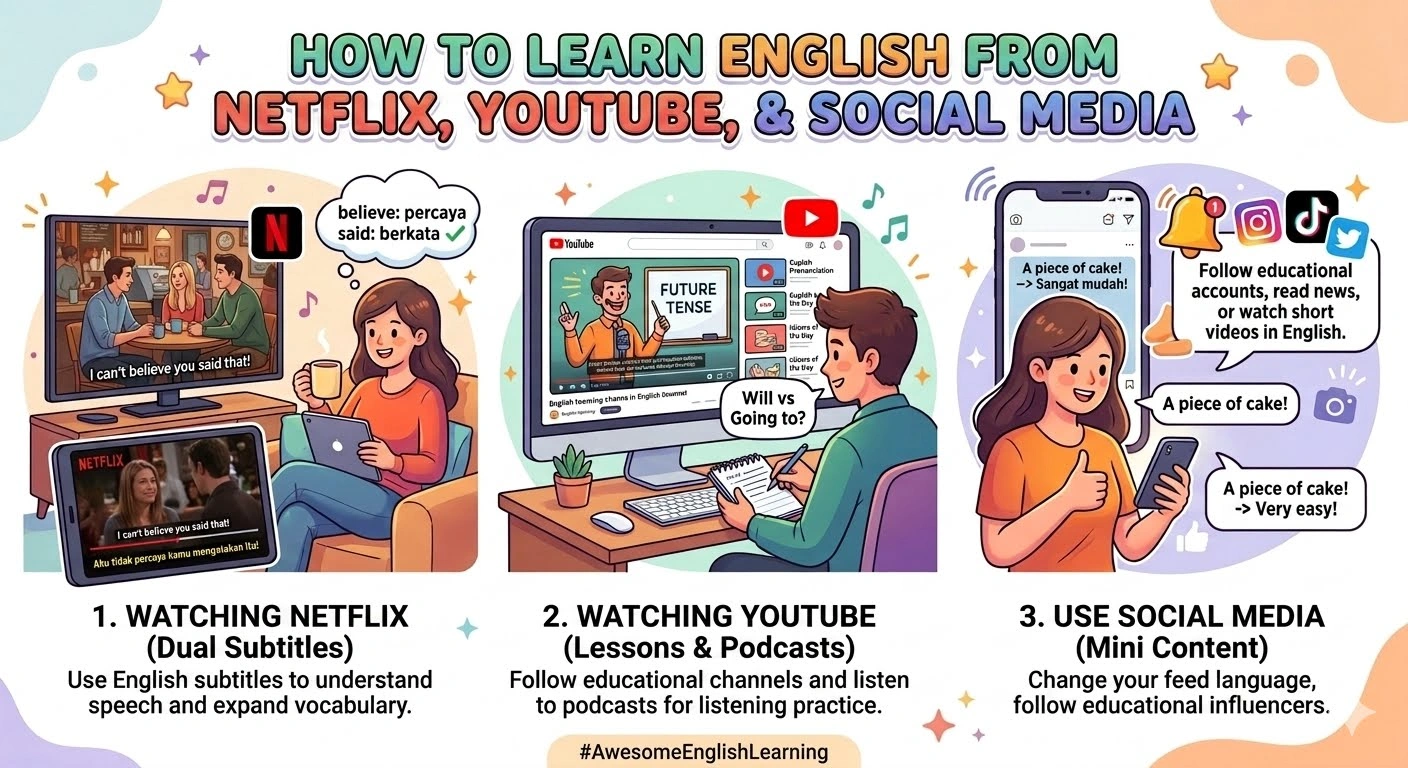
Simply watching a movie in English can help, but parents and teachers can make the experience even more effective.
1. Use English Audio
Whenever possible, choose the original English audio. Children can become familiar with natural pronunciation, rhythm, and intonation.
2. Start With English Subtitles
For children who can already read, English subtitles can help them connect spoken words with their written forms.
3. Don’t Translate Every Word
Children don’t need to understand every sentence. Encourage them to understand the general meaning from the characters, images, and context.
4. Repeat Short Phrases
Pause the movie occasionally and ask children to repeat useful phrases. This can help improve both pronunciation and confidence.
5. Talk About the Story
After watching, ask simple questions such as:
- “Who is your favorite character?”
- “What happened in the story?”
- “Where did the characters go?”
- “What did the character say?”
- “How did the character feel?”
This turns passive watching into active English practice.
Cartoon movies can be a fun and natural way for children to become more familiar with English. Movies such as Toy Story, Finding Nemo, Frozen, Moana, and Kung Fu Panda combine entertaining stories with useful vocabulary, conversations, songs, and pronunciation.
The key is to choose movies that match the child’s age and English level. Instead of expecting children to understand every word, encourage them to listen, repeat interesting phrases, and enjoy the story.
With regular practice, cartoon movies can turn English learning into an enjoyable part of a child’s everyday routine.