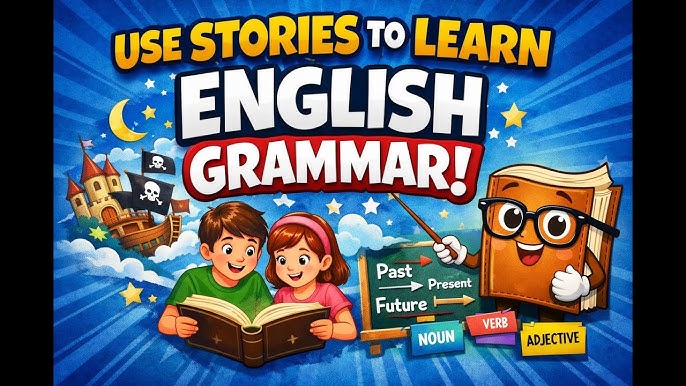
English Grammar Stories Learn with Simple Examples
English Grammar Stories Learn with Simple Examples – If you’ve ever tried to learn English grammar, you probably know how boring it can get. Long rules, confusing exceptions, and endless practice exercises can make anyone feel overwhelmed. But what if grammar could be learned through stories instead? That’s where English Grammar Stories come in. They make grammar simple, memorable, and even fun.
Grammar stories are short, easy-to-read stories that focus on one grammar point. Each story shows how the grammar works in real situations. Instead of memorizing rules, you learn through context. This method helps you remember better and use grammar naturally.
In this article, you will discover why grammar stories work, how to use them, and some simple examples that you can start practicing today.
Why Grammar Stories Work
Most people learn grammar by studying rules. But rules are often abstract and hard to remember. Stories, on the other hand, are easier to remember because they connect grammar to real life. When you read a story, your brain naturally understands the meaning and context. This makes grammar feel less like a rule and more like a habit.
Stories also make learning more enjoyable. When you enjoy learning, you stick with it longer. And consistency is the key to mastering English grammar.
Another benefit is that stories help you understand how grammar sounds in real conversation. Many grammar books use examples that feel too formal or unrealistic. Stories show natural language, with real expressions and everyday situations.
How to Use Grammar Stories Effectively
To get the most out of grammar stories, you don’t need to read long novels. Just short, simple stories will do. Here’s a simple way to practice:
First, read the story once to understand the meaning. Don’t focus on grammar yet. Just enjoy the story.
Second, read it again and pay attention to the grammar point. Notice the structure and how it is used in sentences.
Third, try to make your own sentences using the same grammar. This step is important because it turns passive learning into active practice.
Finally, speak or write the story in your own words. This helps you remember the grammar naturally.
Simple Grammar Story Examples
Below are a few simple grammar stories that focus on common grammar points. Each story is easy to understand and full of everyday language.
Present Simple Story
Maria wakes up early every day. She makes coffee, checks her email, and then goes for a walk. Her dog, Max, loves the morning walk. Maria always talks to Max, and Max always listens. They both enjoy the quiet streets and fresh air.
In this story, the present simple is used to describe habits and routines. It shows what Maria does every day. If you want to practice, try making your own routine story using present simple.
Past Simple Story
Last weekend, John visited his grandparents. He helped them clean the garden and fixed the broken fence. After that, they cooked a big dinner together. John felt happy because he spent time with his family. They laughed and shared old memories.
The past simple is used here to talk about actions that happened in the past. This story shows a complete event that is finished. You can create your own past simple story about a trip or a day you enjoyed.
Future Simple Story
Next month, Emma will start a new job. She will move to a new city and meet new people. She is a little nervous, but she is also excited. Emma believes that everything will be fine. She will work hard and learn quickly.
The future simple is used to talk about plans and predictions. It shows what will happen in the future. Try writing your own story about your future plans using will.
Present Continuous Story
Right now, Alex is studying English. He is sitting in a café and listening to a podcast. His friend is texting him, but Alex is focusing on his lesson. He is practicing grammar and trying to improve his pronunciation.
Present continuous is used for actions happening at this moment. It is also used for temporary situations. You can practice by describing what you are doing right now in a short story.
Past Continuous Story
Yesterday evening, Sarah was cooking dinner when the phone rang. She was talking to her friend while stirring the soup. Suddenly, the lights went out. Sarah was surprised, but she stayed calm. She lit a candle and finished cooking.
Past continuous is used for actions that were happening at a specific time in the past. It shows that something was in progress. You can try writing your own story about something you were doing when something else happened.
Tips for Making Your Own Grammar Stories
Making your own grammar stories is a great way to learn. You don’t need to write perfectly. The goal is to practice grammar naturally.
Start with a simple idea. It can be about your day, your family, or a small event. Then choose one grammar point you want to practice.
Use simple vocabulary and short sentences. The story doesn’t need to be long. A few sentences are enough. The most important thing is to repeat the grammar structure several times.
Also, try to include emotions or small details. This makes the story more memorable and fun.
Final Thoughts
English grammar doesn’t have to be boring. With grammar stories, learning becomes more natural and enjoyable. You learn grammar in real situations, and your brain remembers it better. Whether you are a beginner or an advanced learner, grammar stories can help you improve your English quickly.
If you want to practice more, try reading or writing one grammar story every day. Over time, you will notice your grammar improving without even thinking about rules. Grammar stories are a simple, effective way to learn English.