
Grammar Ain’t That Deep: English for Stand-Up
Grammar Ain’t That Deep: English for Stand-Up | Stand-up comedy is not just about having a funny idea. It is about how you say it. The right words, timing, rhythm, and delivery can turn an ordinary sentence into a punchline. That is why understanding English is important for stand-up comedy—but grammar does not always have to be perfect.
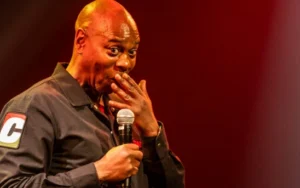
In fact, some of the funniest comedians deliberately break grammar rules to make their jokes sound more natural, surprising, or relatable. Grammar ain’t that deep when the audience understands the joke and the delivery works.
Why English Matters in Stand-Up Comedy
English is full of expressions, slang, idioms, and wordplay. Comedians use these elements to create jokes that sound natural and conversational.
A technically correct sentence may be grammatically perfect but still sound boring on stage. Meanwhile, a sentence that breaks a grammar rule can sometimes get a bigger laugh because it sounds unexpected.
For stand-up comedians, the goal is not always to speak like a textbook. The goal is to communicate an idea clearly while creating a reaction from the audience.
Grammar vs. Natural Speech
Traditional English lessons often teach students to construct perfect sentences. Stand-up comedy works differently.
People rarely speak in perfectly structured sentences during casual conversations. They use contractions, slang, fragments, repetition, and informal expressions.
For example:
“I was gonna go to the gym, but then I remembered I hate being healthy.”
The phrase “gonna” is informal, but it sounds natural in conversation. On stage, that natural quality can make the joke feel more authentic.
A comedian needs to understand the difference between incorrect English and intentional informal English.
That distinction is important.
Timing Is More Important Than Perfect Grammar
In stand-up, timing can be more powerful than grammar.
A comedian may pause before the final word of a sentence, repeat a phrase, or intentionally change the structure of a sentence to make the punchline stronger.
Consider a simple setup:
“My friend told me I need to exercise more.”
A comedian could add:
“So I started running… out of responsibilities.”
The grammar is simple. The humor comes from the unexpected meaning.
This is why comedians should think about rhythm and timing, not just sentence structure.
Why Comedians Break Grammar Rules
Breaking grammar rules can make a joke sound more personal and conversational.
Expressions such as “ain’t,” “gonna,” “kinda,” “y’all,” and “I ain’t got no…” are common in different varieties of spoken English. They may not be appropriate in formal academic writing, but they can be perfectly useful in comedy.
The key is understanding why you are using them.
If a comedian uses informal grammar because it matches their character, background, or comedic voice, it can strengthen the performance.
If they use it accidentally because they do not understand standard English, the result may not have the same effect.
Slang Can Make a Joke Stronger
Slang gives comedians another way to create personality.
Compare these two sentences:
Formal:
“I was extremely tired after work.”
Conversational:
“Man, I was dead after work.”
The second sentence is more casual and expressive. It sounds closer to how people actually talk.
Comedy depends heavily on voice. The words should sound like something the comedian would naturally say.
That is why learning slang and everyday expressions can be just as useful as studying grammar rules.
Word Choice Creates the Punchline
Sometimes one word can completely change a joke.
For example:
“My doctor told me to stop eating junk food.”
That sentence is ordinary.
Now imagine:
“My doctor told me to stop eating junk food. I told him, ‘Okay, but what am I supposed to eat while watching Netflix?’”
The humor comes from the contrast between healthy advice and an exaggerated everyday habit.
Comedians constantly search for words that create the strongest mental image. Simple English can often be more effective than complicated vocabulary.
English Idioms Are Great for Comedy
Idioms can create opportunities for jokes because their literal meanings are different from their intended meanings.
Expressions such as “break a leg,” “spill the beans,” “hit the road,” and “under the weather” can be funny when interpreted literally.
A comedian might take an ordinary expression and imagine what would happen if it actually meant what it said.
This technique is called literal interpretation, and it is a useful tool for creating jokes.
Learning English Through Comedy
Stand-up comedy can also be a fun way to improve English.
Instead of memorizing vocabulary lists, learners can listen to comedians and study how they use language in real conversations.
Pay attention to:
- Contractions
- Slang
- Idioms
- Pronunciation
- Pauses
- Sentence rhythm
- Wordplay
- Cultural references
- Tone and emphasis
Comedy can teach learners that English is not only about grammar rules. It is also about context, emotion, and intention.
The Difference Between Formal and Comedic English
Knowing when to use standard English is still important.
A job interview, academic essay, business presentation, or formal email usually requires more careful grammar. A comedy stage allows much more freedom.
A good comedian understands both worlds.
They know the rules well enough to break them intentionally.
That is the real lesson behind “Grammar Ain’t That Deep.” Grammar matters, but communication and creativity matter too.
How to Build Your Own Comedy Voice
If you want to perform stand-up in English, start by speaking naturally.
Do not try to sound like a dictionary. Do not force complicated vocabulary into your jokes. Instead, focus on telling stories and observations using words you actually understand and would normally use.
Then experiment with:
- Short sentences — They are easier to deliver and easier for audiences to follow.
- Unexpected words — Surprise creates comedic tension.
- Repetition — Repeating a phrase can make it funnier when the context changes.
- Pauses — Silence can build anticipation before a punchline.
- Informal language — Slang can make your performance feel more authentic.
- Exaggeration — Take a normal situation and push it to an absurd level.
The more you perform, the more you discover which language fits your comedic personality.
English for stand-up comedy is not about speaking perfect English all the time. It is about understanding how language works and knowing how to use it effectively.
Grammar ain’t that deep—but language is powerful.
A comedian can use perfect grammar, broken grammar, slang, idioms, or even silence to get a laugh. What matters most is whether the audience understands the idea, connects with the joke, and enjoys the performance.
So learn the rules. Understand the language. Then, when the joke needs it, break a few rules.
Because on the comedy stage, being understood and being funny often matter more than sounding perfect.