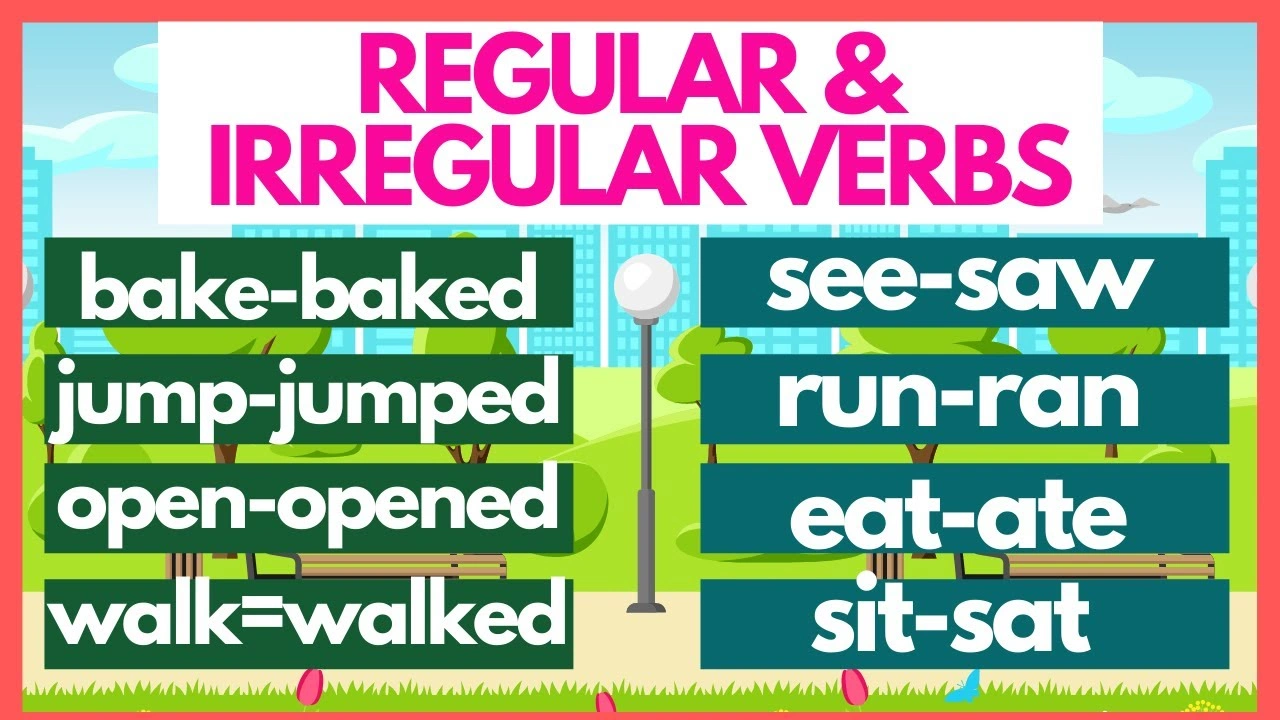
Regular vs Irregular Verbs: A Guide for Beginners
Regular vs Irregular Verbs: A Guide for Beginners | For anyone just starting to learn English, constructing sentences in the past tense often comes with its own set of challenges. Why does the word walk change into walked, while go suddenly transforms into went? Why can’t we just say goed?
These changes are not random coincidences. In English grammar, verbs are divided into two main categories based on how they change: Regular Verbs and Irregular Verbs. Understanding the fundamental differences between these two is the ultimate key to speaking and writing in English with confidence.
Let’s break down both verb groups in a simple yet thorough way, complete with their change patterns and easy ways to master them.
The Core Foundation: Why Do Verbs Change?
Before diving deeper, we need to understand why English verbs change form. Unlike some languages that only use time markers (like adding “yesterday” or “tomorrow” without changing the action word), English alters the structure of the verb itself to show tense.
Every English verb generally has three primary forms, often referred to as:
-
Verb 1 (Base Form): The fundamental or present tense form.
-
Verb 2 (Simple Past): Used to describe actions that were completed in the past.
-
Verb 3 (Past Participle): Used in perfect tenses (actions already completed) or passive voice sentences.
The core difference between regular and irregular verbs lies entirely in how they transition from Verb 1 to Verb 2 and Verb 3.
The First Group: Consistent Regular Verbs
Let’s start with the more beginner-friendly group. True to their name, regular verbs follow a strict, predictable rule. They do not like surprises. If you want to change them into their past tense or past participle forms, you simply add a specific suffix to the end of the base word.
The Golden Rule of Regular Verbs
Generally, the universal formula for regular verbs is incredibly straightforward:
Base Form (Verb 1) + “-ed” or “-d” = Past Tense (Verb 2 & Verb 3)
Let’s look at how this works in real-life examples:
-
Walk The base form is walk. Since it is a regular verb, we just add “-ed” to the end.
-
Present: I walk to school every day.
-
Past Tense: I walked to school yesterday.
-
Past Participle: I have walked to school many times.
-
-
Dance When a base verb already ends with the vowel “e”, we do not add another “-ed” to make it danceed. The correct rule is to simply add the letter “-d” to the very end.
-
Present: They dance gracefully.
-
Past Tense: They danced at the party last night.
-
Past Participle: They have danced together for years.
-
-
Play Just like the first example, this word combines directly with the “-ed” suffix to show that the playing activity happened in the past.
-
Present: Children play in the park.
-
Past Tense: Children played in the park this morning.
-
Past Participle: Children have played there since afternoon.
-
Small Spelling Variatons You Need to Know
Even though the pattern is highly consistent, there is a minor spelling adjustment you should keep in mind to avoid typos. This special rule applies if the base verb ends in a consonant followed by the letter “y”.
When you come across a verb with a consonant + “y” ending, you must drop or change the “y” to an “i” first, and only then add the “-ed” suffix.
As a clear example, look at the word Cry. This word ends with the consonant ‘r’ followed by the letter ‘y’.
-
Base Form: Cry
-
Spelling Shift: Change ‘y’ to ‘i’ (Cri)
-
Final Result: Cried
The exact same rule applies to words like Study which becomes Studied, or Try which becomes Tried. Keeping this small rule in mind ensures your English writing looks polished and professional.
The Second Group: Irregular Verbs and Their Surprises
Now we turn our attention to the group that often makes new learners scratch their heads. Irregular verbs are the rebels of the English language that refuse to follow the “-ed” formula. They prefer to pave their own path.
When moving from the base form to the past tense, irregular verbs change their internal vowel structure, alter their sound completely, or in some cases, do not change at all. Because they lack a consistent writing pattern, there is no mathematical formula to guess their forms. The best way to master them is through exposure and natural memorization.
The Unique Patterns of Irregular Verbs
Although they are called “irregular,” if you look closely, these verbs actually fall into a few predictable categories:
1. Verbs That Change Completely
These are verbs whose past tense forms look entirely different from their original words. You wouldn’t be able to guess their past forms if you hadn’t seen them before.
-
Go → Went (Verb 2) → Gone (Verb 3)
-
Eat → Ate (Verb 2) → Eaten (Verb 3)
-
Buy → Bought (Verb 2) → Bought (Verb 3)
2. Verbs That Change Internal Vowels
This type keeps the starting and ending letters mostly intact but changes the vowel sound in the middle to signal a shift in time.
-
Sing → Sang (Verb 2) → Sung (Verb 3)
-
Drink → Drank (Verb 2) → Drunk (Verb 3)
-
Run → Ran (Verb 2) → Run (Verb 3)
3. Verbs That Stay Exactly the Same
For many, this category is both the easiest and the most trickiest. These verbs experience absolutely no structural changes from Verb 1 to Verb 3. Telling them apart depends entirely on the context of the sentence or how they are pronounced.
-
Cut → Cut (Verb 2) → Cut (Verb 3)
-
Put → Put (Verb 2) → Put (Verb 3)
-
Read → Read (Verb 2) → Read (Verb 3) (Note: The spelling stays the same, but the pronunciation for Verb 2 and Verb 3 changes to sound exactly like the color “red”).
Effective Strategies to Master Both Verb Types
Looking at a massive list of irregular verbs might feel overwhelming, making you think you need to memorize thousands of words overnight. Fortunately, you don’t have to do that. These tactical steps will help embed these verb changes naturally into your memory:
Learn Through Contextual Stories
Memorizing a long, linear list of words is often boring and easily forgotten. Try reading short stories or articles in English instead. When you spot a past tense verb, underline it and find its base form. Our brains retain information much better when it is tied to a narrative context.
Group Irregular Verbs by Rhyme and Sound
Even though they are irregular, many of these verbs share similar transformation rhythms. You can group them into small clusters, such as the “Blow-Blew-Blown,” “Grow-Grew-Grown,” and “Throw-Threw-Thrown” group. Remembering words that rhyme puts far less strain on your brain.
Apply Them in Daily Practice
Every time you learn three to five new verbs, immediately use them to build your own sentences. Write a quick journal entry about your day using the past tense. Active, hands-on practice is the ultimate method for moving information from short-term memory into long-term retention.
Distinguishing between regular and irregular verbs is actually an engaging logical puzzle. Regular verbs offer the comfort of certainty through their fixed “-ed” or “-d” formulas. On the flip side, irregular verbs challenge us to be more observant and familiar with the quirks of the English language through internal adjustments.
The real key to mastering this is not instant perfection, but consistency in reading, listening, and practicing in daily communication. Over time, as your interaction with English increases, your instincts will take over, allowing you to choose the right verb form naturally without a second thought. Happy practicing!
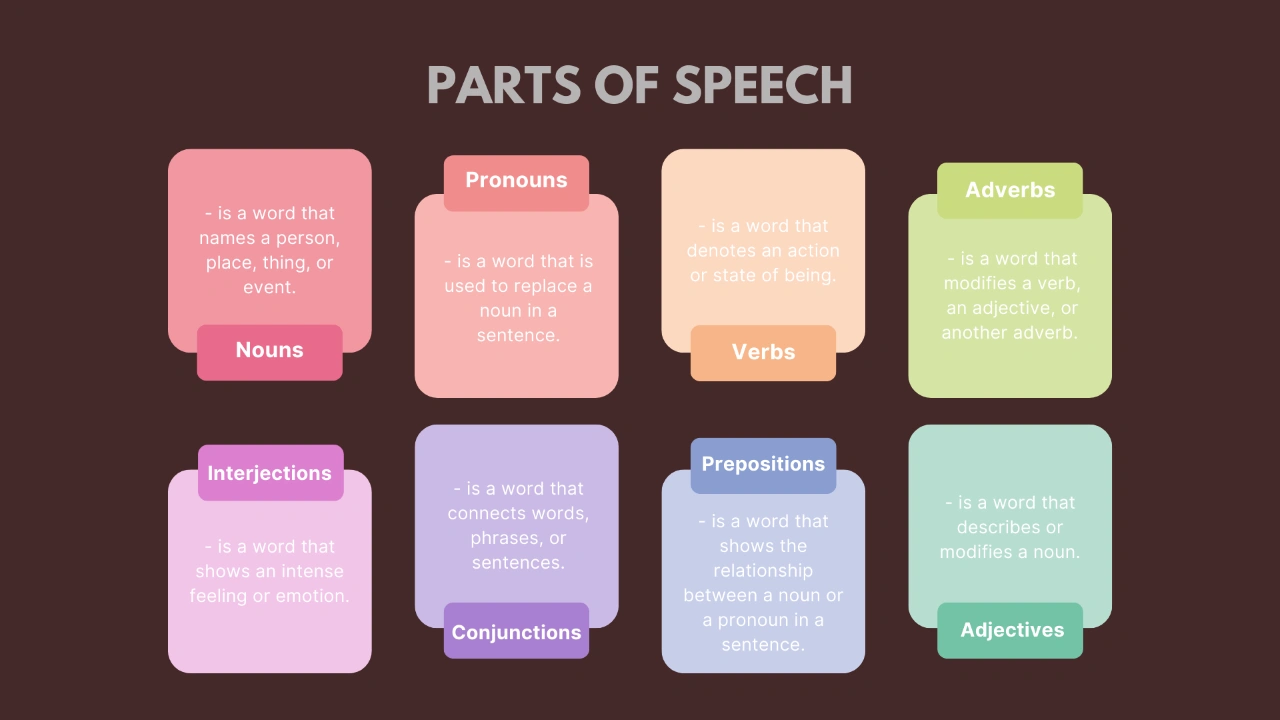
Mastering English Grammar: The 8 Parts of Speech
Mastering English Grammar: The 8 Parts of Speech | When diving into English layout, many learners immediately jump into memorizing complex tense formulas. However, there is a fundamental building block that you must master first: the Parts of Speech (Word Classes).
In English grammar, every single word we speak or write plays a specific role within a sentence. This role is what we call a part of speech. By understanding how these word classes function, you will not only construct grammatically correct sentences but also communicate with far greater confidence.
Let’s break down these eight essential elements of the English language, along with their rules and practical examples.
Understanding the 8 Elements of Parts of Speech

1. Noun
A noun is used to name a person, place, thing, or abstract idea. Nouns act as the anchor of a sentence.
-
The Rule: It can function as either a subject or an object. Nouns are divided into countable and uncountable forms.
-
Examples: Cat, London, Happiness, Book.
-
In a Sentence: “The cat slept on the chair.”
2. Pronoun
To keep sentences from sounding repetitive and tedious, we use pronouns to replace nouns.
-
The Rule: A pronoun must agree in number (singular or plural) with the noun it replaces.
-
Examples: I, you, they, he, she, it, this.
-
In a Sentence: “Siti is tired because she walked all day.”
3. Verb
Without a verb, a statement cannot be considered a complete sentence. Verbs express actions, occurrences, or states of being.
-
The Rule: Verbs change their form depending on the time of the action (tenses).
-
Examples: Run, is, writing, think.
-
In a Sentence: “They played football yesterday.”
4. Adjective
The primary job of an adjective is to modify, describe, or give more detail about nouns and pronouns.
-
The Rule: They are usually placed directly before the noun they describe.
-
Examples: Beautiful, smart, blue, huge.
-
In a Sentence: “He bought a beautiful watch.”
5. Adverb
While adjectives describe nouns, adverbs are tasked with modifying verbs, adjectives, or even other adverbs.
-
The Rule: They often (but not always) end with the suffix “-ly”.
-
Examples: Quickly, very, yesterday, everywhere.
-
In a Sentence: “She sang beautifully.”
6. Preposition
Prepositions function to show relationships of direction, time, location, or position between a noun and other words.
-
The Rule: They are always followed by a noun or pronoun object.
-
Examples: In, on, at, under, between.
-
In a Sentence: “The keys are on the table.”
7. Conjunction
Conjunctions act as the “glue” that connects words, phrases, or clauses together, ensuring the sentence flows logically.
-
The Rule: They are used to link equal grammatical elements or show cause-and-effect relationships.
-
Examples: And, but, because, although.
-
In a Sentence: “I wanted to go, but it started to rain.”
8. Interjection
An interjection is used to express sudden, spontaneous, or strong emotions.
-
The Rule: They usually stand alone or sit at the beginning of a sentence, followed by an exclamation mark or a comma.
-
Examples: Wow!, Ouch!, Oh, Well.
-
In a Sentence: “Wow! That performance was amazing.”
English Shape-Shifters: One Word, Multiple Roles
One unique aspect that frequently confuses beginners is the sheer flexibility of English words. A word is not always permanently locked into a single part of speech. Its role can shift entirely depending on how it is positioned within a sentence.
Take a look at how the word “work” changes:
-
As a Noun: “I have a lot of work to do.”
-
As a Verb: “I work at a tech company.”
Similarly, the word “well” can act as an adverb (“She speaks English well“), an adjective (“I am well“), or even a noun meaning a water source. Therefore, the secret to mastering this topic is not memorizing the dictionary, but rather understanding the sentence context.
Open Class vs. Closed Class
On a broader scale, these eight word classes are divided into two major categories:
-
Open Class: This group consists of words that constantly expand as time, culture, and technology evolve. It includes nouns, verbs, adjectives, and adverbs. For instance, modern terms like “googling” or “selfie” were naturally added over time.
-
Closed Class: This category contains words with a fixed count that rarely accept new additions. This includes pronouns, prepositions, conjunctions, and interjections.
Mastering the parts of speech is the most realistic first step if you want to write and speak English fluently. Once you comprehend how each element operates, constructing even the most complex sentences will feel significantly easier and more structured. Happy practicing in your daily learning routine!
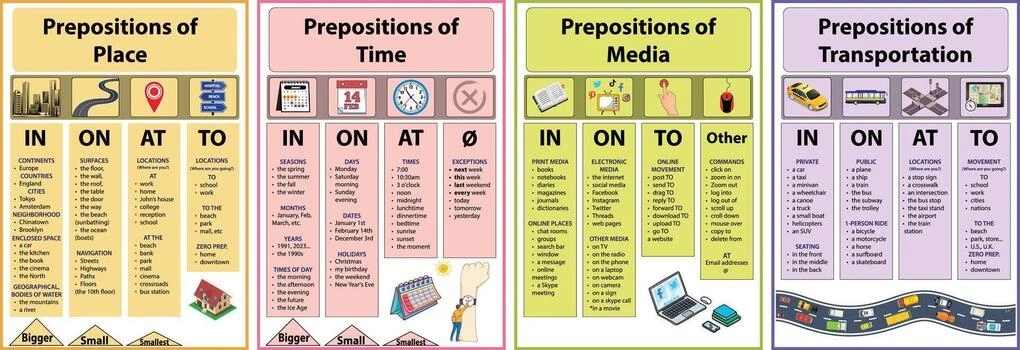
A Beginner’s Guide to Using In, On, and At
A Beginner’s Guide to Using In, On, and At | For many English learners, figuring out when to use in, on, or at can feel like a guessing game. It makes sense why it is confusing. In many other languages, a single word can cover all these situations. You might use the same word for a city, a street, a specific time, or the top of a desk.
However, in English, that concept splits into three different choices. Picking the wrong one can make your sentences sound a bit unnatural to native speakers.
The good news is that mastering these three prepositions does not have to be painful. The biggest secret lies in scale and size. Picture an inverted pyramid: the wide top part represents large, general categories (In); the middle section covers medium, more specific groups (On); and the sharp point at the bottom is for tiny, exact points (At).
Let’s break down how this pyramid works for both time and place, using everyday examples to clear up the confusion once and for all.
Part 1: Showing Time from General to Specific
When talking about time, the golden rule is to look at the length of the period. The longer or broader the duration, the higher it sits on the pyramid. As the time becomes narrower and more precise, it moves down to the very tip.
1. Using “In” for General and Long Time Periods
Use in when you are talking about large, broad, or non-specific periods of time. This includes centuries, decades, years, seasons, and months. Because the time frame is so vast, we put it in the biggest container: in.
Here are the main time groups that always require in:
-
Years: in 2026, in 1945.
-
Months: in July, in December.
-
Seasons: in summer, in winter.
-
Decades or Centuries: in the 1990s, in the 21st century.
-
Parts of the Day: in the morning, in the afternoon, in the evening.
Let’s look at these in full sentences:
-
I plan to start a new business in 2026.
-
My brother was born in July.
-
She loves drinking coffee in the morning.
Important Note (The Exception): Even though we say in the morning/afternoon/evening, there is a special exception for the night. We do not say in the night. Instead, you must use at night. Think of it as a unique quirk of the English language that everyone has agreed on.
2. Using “On” for Specific Days and Dates
Now, let’s move down to the middle of the pyramid. The scope gets narrower than a month or a year. We use on specifically for certain days and calendar dates.
Some of the most common uses of on include:
-
Days of the Week: on Monday, on Friday, on weekends.
-
Specific Dates: on July 4th, on the 17th of August.
-
Special Celebration Days: on my birthday, on Christmas day, on New Year’s Eve.
Here is how they look in daily conversations:
-
We will have a weekly meeting on Monday.
-
The independence day of Indonesia is on August 17th.
-
I received a beautiful gift on my birthday.
3. Using “At” for Exact and Precise Moments
At the very bottom tip of our pyramid, we are talking about highly specific times. There is no guesswork here. At is used for exact clock times, very short moments, or holiday periods without the word “day.”
Use at for situations like:
-
Clock Times: at 6:30 PM, at 10 o’clock.
-
Specific Times of Day: at noon, at midnight, at night.
-
Short Moments: at the moment, at present.
-
Holidays (As a Period): at Christmas, at Easter. (Note: If you add the word “day” after it, like Christmas Day, switch back to on).
Examples in a sentence:
-
The train leaves at 6:30 PM sharp.
-
Let’s grab some lunch at noon.
-
He is busy at the moment, please call back later.
Part 2: Showing Place Based on Area and Scale
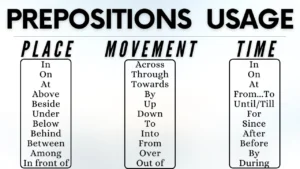
Just like time, determining the correct preposition for a place follows the exact same inverted pyramid logic. We look at how wide or enclosed the area is.
1. Using “In” for Large Areas or Enclosed Spaces
Imagine putting something inside a box or a container that has clear boundaries around it. That is the core idea of in. On a map, in is used for large geographic areas like countries, cities, or neighborhoods.
Beyond geography, in is also used for three-dimensional spaces with walls or ceilings, including small vehicles.
Examples of areas that use in:
-
Countries and Cities: in Japan, in Seattle, in Jakarta.
-
Rooms or Buildings: in the kitchen, in the bedroom, in a building.
-
Small Vehicles (where you have to duck down to enter): in a taxi, in a car.
Examples in a sentence:
-
She currently lives in Japan for her studies.
-
My mother is cooking dinner in the kitchen.
-
I left my umbrella in a taxi.
2. Using “On” for Surfaces and Public Transit
Unlike in, which means being inside an enclosed space, on means an object is touching a surface. You can picture it resting on something flat, whether it is horizontal or vertical (like a wall).
Interestingly, on is also used for floors of a building and large public transportation vehicles where you can easily stand up and walk around inside.
Examples of places that use on:
-
Flat Surfaces: on the table, on the wall, on the floor.
-
Floors of a Building: on the 5th floor, on the second floor.
-
Large Public Transit: on a bus, on a train, on a plane.
-
Street Names (Without a House Number): on Sudirman Street.
Examples in a sentence:
-
Your keys are sitting on the table.
-
Our office is located on the 5th floor.
-
I was already on the bus when you called me.
3. Using “At” for Specific Points and Locations
Sitting at the sharpest point of the pyramid, at points to an exact coordinate. When you use at, you are not focusing on whether you are inside a room or on top of a surface. Instead, you are simply sharing your general presence at a specific spot on the map.
This includes complete addresses with numbers or public venues with a specific social function.
Examples of locations that use at:
-
Complete Addresses: at 123 Main Street. (If it is just the street name, use on. If it includes the house number, always use at).
-
Public Facilities or Transit Points: at the airport, at the bus stop, at the station.
-
Places of Activity/Study: at school, at university, at work.
-
Events or Gatherings: at a concert, at a party.
Examples in a sentence:
-
Please send the package to my office at 123 Main Street.
-
We agreed to meet at the airport.
-
My children are still at school right now.
-
I met a lot of interesting people at a concert last night.
Quick Summary: The Right Mindset
Let’s bring everything together into one simple mindset so you can easily remember this whenever you write or speak.
-
Use IN when you think about something large, wide, and long-lasting (like a city or a month), or when something is inside an enclosed space.
-
Use ON when you see an object resting on a surface, when talking about days and dates, or when riding large public transport.
-
Use AT when you want to point out a highly specific point, whether it is an exact clock time or a precise address/location on a map.
The best way to truly master these three words is not by memorizing lists. Instead, start using them actively. Try making a few simple sentences about your own daily routine. The more you practice this pyramid logic, the more natural your English instincts will become. Happy practicing!

How to Use A, An, and The: A Beginner’s Guide
How to Use A, An, and The: A Beginner’s Guide | When learning English, there is a trio of tiny words that often makes beginners hesitate before speaking or writing: a, an, and the. In the world of grammar, these are known as articles.
While they might seem small and insignificant, using them correctly plays a massive role in making your sentences clear. Unlike some languages where word markers rarely change, English has specific, strict rules for these little words.
To put it simply, articles function like adjectives. Their main job is to tell the reader whether a noun is specific (unique) or general (any item). Let’s break down how to use them with simple, practical rules.
1. Getting to Know the Basics: When to Use ‘A’ and ‘An’
The first group consists of a and an, which are called indefinite articles. We use them when talking about a single, countable noun (singular, countable nouns) that is general, non-specific, or being mentioned for the very first time in a conversation.
The golden rule for choosing between “a” and “an” has nothing to do with how a word is spelled. Instead, it is all about the vowel sound that starts the word.
Use ‘A’ Before Consonant Sounds
Place a before words that begin with a consonant sound.
-
Examples: a dog, a car.
-
The tricky exception: Look at the word university. Even though it starts with the vowel letter ‘U’, it is pronounced with a ‘Y’ sound (yoo-ni-ver-si-ty). Because ‘Y’ is a consonant sound, the correct phrase is a university, not an university.
Use ‘An’ Before Vowel Sounds
Place an before words that begin with a vowel sound (A, E, I, O, U).
-
Examples: an apple, an umbrella.
-
The tricky exception: Look at the word hour. The letter ‘H’ at the beginning of this word is silent, meaning we don’t pronounce it at all. The word actually starts with a vowel sound (ow-er). Therefore, we must write an hour, not a hour.
2. When to Use ‘The’ for Specific Things
On the other side of the coin, we have the, which is known as the definite article. We use it when the noun we are talking about is specific, already known to the listener, or unique. One great thing about the is its flexibility: it can be used with singular, plural, and even uncountable nouns.
Here are the most common situations where the is required:
-
Specific Items: When you are pointing out a particular object, not just any random one.
-
Example: “Please pass me the red pen.” (This means you want that exact red pen, not a blue one or just any pen from the desk).
-
-
Unique Things: Objects or concepts where there is only one of its kind.
-
Example: “The sun is shining.” (There is only one sun in our sky).
-
-
Second Mentions: When you introduce a noun for the first time, use a or an. The moment you mention that exact same noun again, switch to the because your listener now knows exactly which one you mean.
-
Example: “I saw a dog. The dog was barking.”
-
3. The Zero Article: When to Skip Them Completely
Part of mastering English articles is knowing exactly when not to use them. This is often called the zero article rule. You should omit articles in the following scenarios:
-
Plural or Uncountable Nouns in a General Sense: When you are talking about all things or all animals as a whole category.
-
Correct: “Dogs are great pets.” (This means dogs in general).
-
Incorrect: “The dogs are great pets.” (This is incorrect if you are talking about all dogs universally).
-
-
Proper Nouns: Most names of people, cities, and countries do not take an article.
-
Correct: “I live in France.”
-
Incorrect: “I live in the France.”
-
Summary and Next Steps
Mastering a, an, and the is all about practice and tuning your ears to English speech. Just remember the two core principles: rely on the spoken sound to choose between a and an, and check how specific your noun is to choose between a/an and the.
An excellent way to practice this right now is to look around your room and write down three simple sentences using these articles. The more you put it into practice, the more natural it will feel!
Master 12 English Tenses: A Simple and Fun Guide for Beginners
Master 12 English Tenses: A Simple and Fun Guide for Beginners | When you start learning English, one of the biggest hurdles that often causes a headache is verb tenses. Why does a verb have to change its form just because the time changes? Unlike some languages where you can just add words like “yesterday” or “tomorrow,” English completely shifts the sentence structure.
However, understanding tenses isn’t as scary as it seems. Once you spot the patterns, these time rules actually help you express your thoughts much more accurately in both speech and writing. Let’s break down the core concepts the simplest way possible!
What Is a Verb Tense?

In short, a verb tense is a change or addition to a verb that shows when an action took place: whether in the past, present, or future.
But English doesn’t stop at just telling time; it also looks at the duration or nature of the action (known as grammatical aspects). Some actions are already completed, some are currently happening, and others have been going on for a long time. When you combine the 3 main time zones with these 4 aspects, you get the 12 main verb tenses in English.
Understanding the 3 Main Time Zones
The very first foundation you need to grasp is the basic division of time. Everything we communicate falls into one of these three zones:
-
Present: Used for actions happening right now, regular habits, or general truths.
-
Past: Used to talk about events that are already finished and left behind.
-
Future: Used to plan, predict, or imagine what will happen later.
Diving Into the 4 Grammatical Aspects
Now that you know the time zones, let’s see how the 4 aspects add extra details to those times.
1. Simple Tense
True to its name, this aspect is basic and straightforward. The simple tense doesn’t add extra details about duration; it just states that an action happens in that specific time zone.
-
Present Example: I play soccer. (I do this as a hobby or routine).
-
Past Example: I played soccer yesterday. (The activity is completely finished).
2. Continuous Tense (Progressive)
Use this form when you want to emphasize that an action is currently ongoing and takes a certain amount of time before completion. Its main trademark is the use of a helping verb (is/am/are/was/were) followed by a verb ending in -ing.
-
Example: They are studying all night. (This means the act of studying lasts for hours).
-
Quick Note: Avoid using -ing with stative verbs that show feelings or possession, such as want, love, have, or need.
3. Perfect Tense
This one is a bit unique because it connects one point in time to another. Most often, the perfect tense describes an action that started in the past but still impacts the present. The formula always pairs have/has/had with a Past Participle (Verb 3).
-
The Comparison:
-
I played soccer when I was a child. (Using Simple Past—meaning it’s purely in the past and you don’t play anymore).
-
I have played soccer since I was a child. (Using Present Perfect—meaning you started as a kid and still actively play today).
-
4. Perfect Continuous Tense
What happens when you blend perfect and continuous? You get a form that describes an action that has been and is still happening over a period of time. The structure uses have/has/had + been + Verb-ing.
-
Example: She has been waiting for two hours. (She started waiting two hours ago, and she is still waiting right now).
Easy Steps to Start Practicing
As a beginner, you don’t need to memorize all 12 forms in one night. The best strategy is to master the Simple and Continuous forms first for daily conversations. Once you feel comfortable, move on to the more complex Perfect tenses. Making mistakes is a natural part of the journey, so don’t be afraid to start practicing today!